Short answer
File in the California Superior Court for the right county, within two years of the injury under CCP 335.1, and expect a filing fee unless you qualify for a waiver. Before that, name every possible defendant: the driver, the carrier, the vehicle owner, a maintenance provider, the cargo loader. Federal hours-of-service records from the truck's electronic logging device document driver fatigue, so preserve them early.
If you were injured in a truck accident in California, you can file a lawsuit by gathering critical evidence, identifying the parties responsible, meeting the applicable filing deadline, and submitting the required documents to the appropriate court. This process matters because truck accident cases can involve multiple liable parties, complex federal and state regulations, and significant damages. Taking the right steps early can help protect your claim and preserve important evidence needed to seek fair compensation.
A truck accident can leave you dealing with serious injuries, medical bills, and an insurance company while you’re trying to recover. At My Injury Pros, Founder and Managing Partner Steven Nassi brings nearly 25 years of legal experience to personal injury cases, with a team that investigates the details, works with experts, and handles the legal fight while you focus on healing. Contact My Injury Pros for a free consultation, with no fees unless we recover compensation for you.
This guide gives you a clear overview of how to file a truck accident lawsuit in California. It also explains the key legal steps and what you should know before moving forward.
What You Should Know Before Filing a Truck Accident Lawsuit in California
Before filing a truck accident lawsuit in California, you should understand how the state’s laws may affect your claim. This includes knowing the deadline for filing, who may be responsible for the accident, what evidence you need to support your case, how your own actions may affect compensation, and whether you have already received or accepted an insurance settlement.
You should also know that truck accident cases can be more complicated than typical car accident claims. More than one party may be involved, including the truck driver, trucking company, vehicle owner, or a company responsible for loading the cargo. Gathering evidence such as medical records, police reports, photographs, witness statements, and available trucking records can be important when determining what happened and who may be liable.
Finally, filing a lawsuit does not guarantee compensation, and the process can involve negotiations, legal filings, discovery, and potentially a trial. Speaking with a California personal injury attorney before filing can help you understand your legal options, the potential value of your claim, and whether pursuing a lawsuit makes sense based on the facts of your accident.
Who Can Be Liable for a Truck Accident?
Truck accident cases can involve more than just the truck driver. Depending on what caused the crash, the trucking company, vehicle owner, cargo loading company, maintenance provider, or truck manufacturer may also be liable.
For example, poor maintenance, improper cargo loading, a defective part, reckless driving, distracted driving, or a negligent driver can each point to different responsible parties. Identifying everyone who may share liability is important because it can affect where you seek compensation and what evidence needs to be preserved.
How Is Fault Determined in a Truck Accident?
Determining fault starts with looking closely at what happened before and during the truck crash. Evidence such as the police report, witness statements, driver logs, maintenance records, vehicle data, and accident-scene photographs can help show whether negligence played a role.
Federal trucking regulations may also be relevant, particularly when driver fatigue or hours-of-service violations are involved. The Federal Motor Carrier Safety Administration (FMCSA) regulates hours of service for many commercial motor vehicle drivers, including limits on driving time and required rest periods.
How Does Comparative Negligence Work in California?
California follows a comparative negligence system, which means your compensation can be reduced if you are found partly responsible for your injuries. For example, if you are found 20% responsible, your damages may be reduced by that percentage.
That does not automatically prevent you from bringing a personal injury claim. The percentage of fault is determined based on the evidence and circumstances of the case.
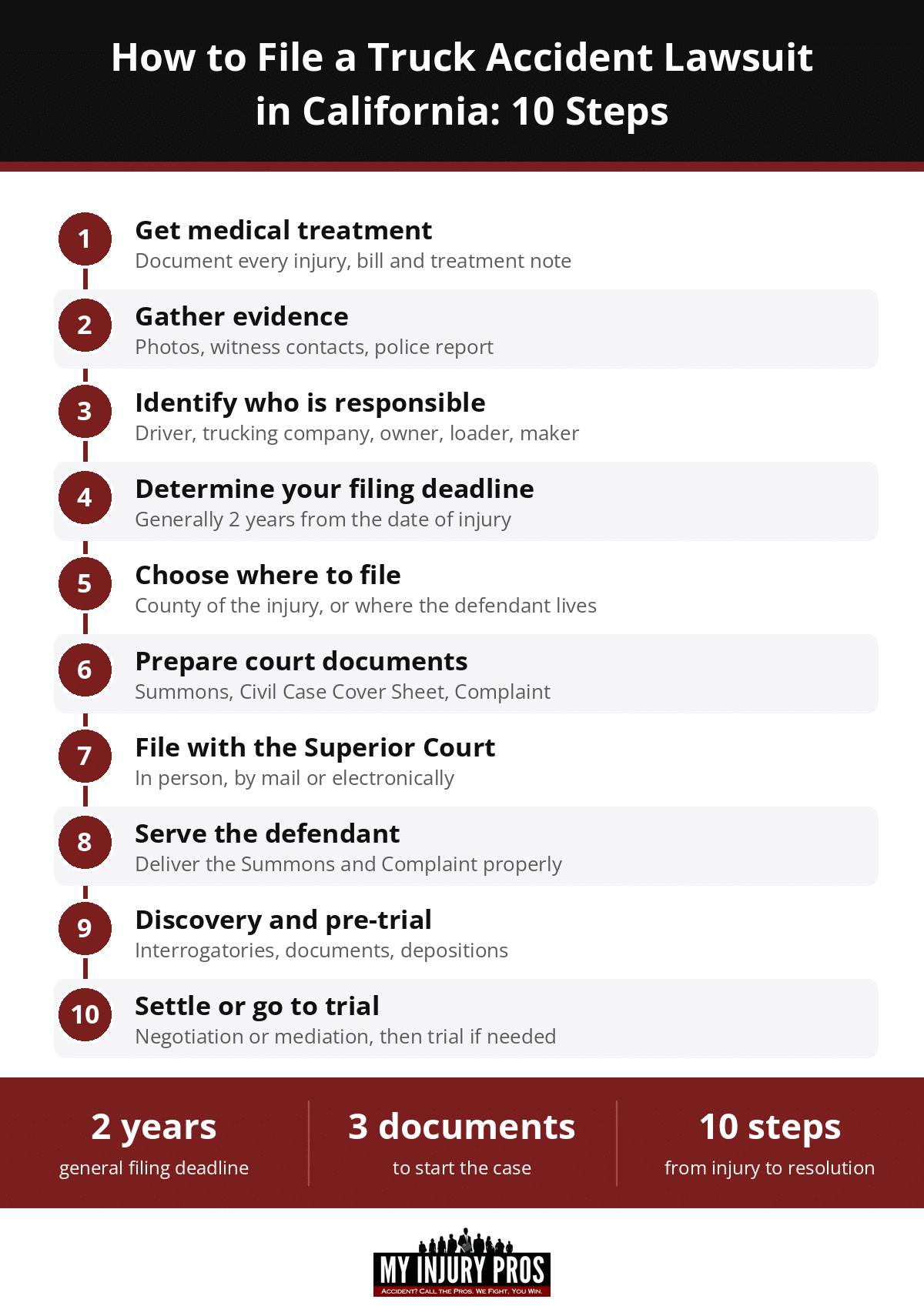
How to File a Truck Accident Lawsuit in California: Step by Step
Once you decide a lawsuit may be necessary, several steps separate the accident from getting your case before a judge or jury. Taking each step carefully can help protect your truck accident claim, especially when important evidence or filing deadlines are involved.
Step 1: Get Medical Treatment and Document Your Injuries
Your health comes first after a truck accident, so seek medical treatment as soon as possible, even if your injuries do not seem severe at first, in case of internal injuries. Keep your medical records, bills, treatment notes, and other documentation because they can help establish the connection between the crash and your injuries. California courts list medical bills and doctor reports as evidence related to the injury that can support a personal injury case.
Step 2: Gather Evidence From the Truck Accident
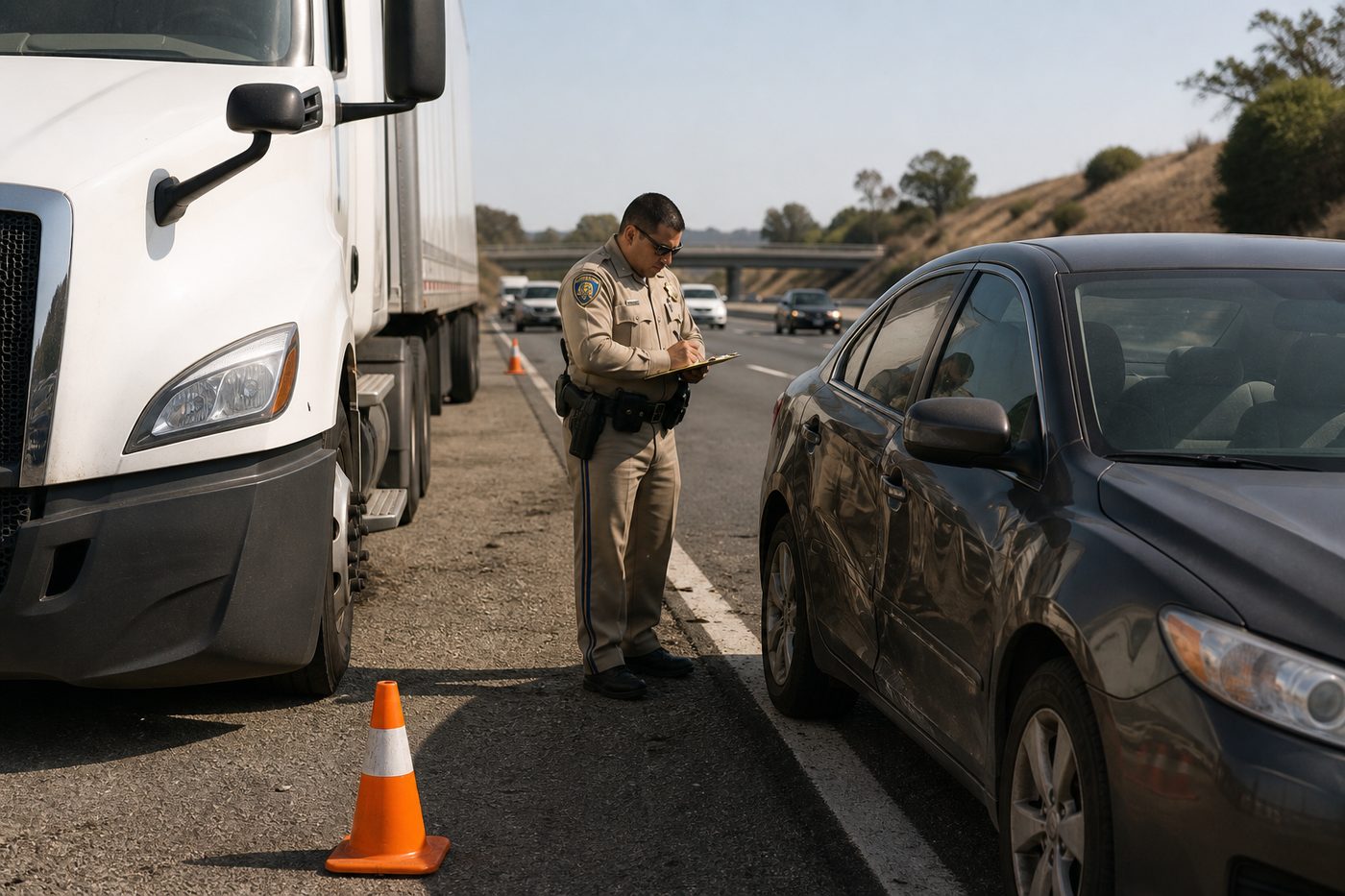
If you can do so safely, gather evidence at the accident scene, including photographs of the vehicles, road conditions, visible injuries, and property damage. Get contact information from witnesses and keep copies of the police report, medical records, and insurance documents.
Commercial truck accident cases may also involve evidence that is not available at the scene, such as driver logs, maintenance logs, black box data, dashcam footage, and trucking company records. Because some evidence becomes harder to obtain over time, preserving it early can be critical to a thorough investigation.
Step 3: Identify Everyone Who May Be Responsible
A truck accident may involve multiple liable parties, not just the truck driver. Depending on the circumstances, the trucking company, vehicle owner, cargo loading company, maintenance provider, or truck manufacturer may also have responsibility for the crash.
Identifying the correct parties before filing matters because each defendant may have different insurance coverage, records, and potential liability. California Courts also note that determining who is responsible can require research into the people or businesses involved.
Step 4: Determine Your Filing Deadline
In California, you generally have two years from the date of injury to file a personal injury lawsuit, including a truck accident claim. Missing the applicable statute of limitations can prevent you from recovering damages, although certain circumstances can change the deadline.
Claims involving government entities can have much shorter deadlines and additional requirements, so it is important to identify whether a government agency is involved before assuming the standard two-year deadline applies.
Step 5: Determine Where to File the Lawsuit
Your lawsuit needs to be filed in the appropriate court and county, known as the venue. For a personal injury case, California courts say you will usually file in the county where the injury occurred or where the defendant lives or does business. Venue matters in truck cases, so if the wreck was near Fresno, talk to a Fresno personal injury lawyer about where it will be filed.
With a truck accident involving multiple defendants, determining the proper venue can become more complicated. An experienced truck accident attorney can help determine which court is appropriate for your case.
Step 6: Prepare the Required Court Documents
Starting a truck accident lawsuit requires specific court documents. California courts generally require a plaintiff to file a Summons, Civil Case Cover Sheet, and Complaint, with at least one cause of action included in the complaint. For a personal injury case, the complaint tells the court and the defendants what happened and the legal reasons you are bringing the lawsuit. Depending on the case, you may also need to include additional cause-of-action forms or attachments.
Step 7: File the Lawsuit With the Court
Once you prepare your documents, you must file them with the appropriate California Superior Court. Depending on the court, you may be able to file in person, by mail, or electronically, and a filing fee generally applies unless you qualify for a fee waiver. The date your case is successfully filed can matter, especially as you approach the statute of limitations. After filing, the court keeps the originals and returns copies for the next stage of the legal process.
Step 8: Serve the Defendant
Filing the lawsuit does not automatically notify the defendant. You must properly serve the Summons and Complaint on each person, business, or government entity being sued under California's service rules. This step is important because improper service can delay the case and create additional legal issues. A lawyer or professional process server can help make sure the required documents are served correctly.
Step 9: Go Through Discovery and Pre-Trial Proceedings
After the lawsuit begins, both sides enter the discovery phase, where they exchange information and gather evidence. This can include interrogatories, requests for documents, requests for admission, depositions, and other evidence-gathering methods.
Truck accident discovery may be particularly important when records such as driver logs, maintenance documents, company records, or electronic vehicle data could help establish negligence. Depending on the case, pre-trial motions and expert testimony may also become part of the litigation process.
Step 10: Negotiate a Settlement or Go to Trial
A truck accident lawsuit does not necessarily end with a trial. Settlement negotiations can happen at different stages of litigation, and the parties may also use mediation to try to resolve the dispute before trial. If the parties cannot reach an agreement, the case can proceed to trial, where they present evidence and arguments to the court or jury. The outcome will depend on the facts, evidence, applicable California law, and the issues disputed by the parties.
Truck Accident Lawsuit vs. Insurance Claim: What's the Difference?
An insurance claim and a truck accident lawsuit are two different ways of pursuing compensation after a crash. Understanding the difference can help you know what to expect if your insurance claim does not resolve your case.
Filing a lawsuit does not necessarily mean your case will go to trial. You and the other parties can continue settlement negotiations or use mediation to try to resolve the dispute while the lawsuit is pending.
What Is the Statute of Limitations for a Truck Accident Lawsuit in California?
The statute of limitations sets a deadline for filing a truck accident lawsuit in California. While many personal injury claims generally have a two-year filing window, the deadline can vary depending on the accident circumstances and who is responsible.
In California, you generally have two years from the date of an injury to file a personal injury lawsuit. This general rule can apply to injuries resulting from a truck accident, but the exact deadline depends on the circumstances of the case.
It is important not to assume that every truck accident gives you exactly two years to file. Factors such as when you discovered the injury, who you are suing, and whether a specific tolling rule applies can affect when the filing deadline begins and how it is calculated.
Are There Exceptions to the Two-Year Deadline?
Yes, there are exceptions to the two-year deadline. Certain circumstances can change the deadline or add requirements before you can file a lawsuit. For example, if your truck accident claim involves a government agency, California has separate rules that generally require you to submit a claim to the agency within six months for injury or property damage claims. If the government agency denies the claim, you generally have six months from the date it mailed the rejection to file a lawsuit.
Tolling may also affect how a statute of limitations is calculated in some situations. California Courts explain that tolling can pause a deadline under certain circumstances, so determining the correct filing date may require a close look at the facts of your case. Because missing the applicable deadline can prevent you from pursuing your claim in court, it is important to determine the specific deadline that applies to your situation rather than relying only on the general two-year rule.
What Evidence Can Help Support a Truck Accident Lawsuit?
Truck accident cases can involve more evidence than the photos and medical records typically associated with a car accident. Because commercial trucks are subject to additional rules and recordkeeping requirements, evidence about the driver, vehicle, company, and cargo may also help establish what happened and who may be responsible.
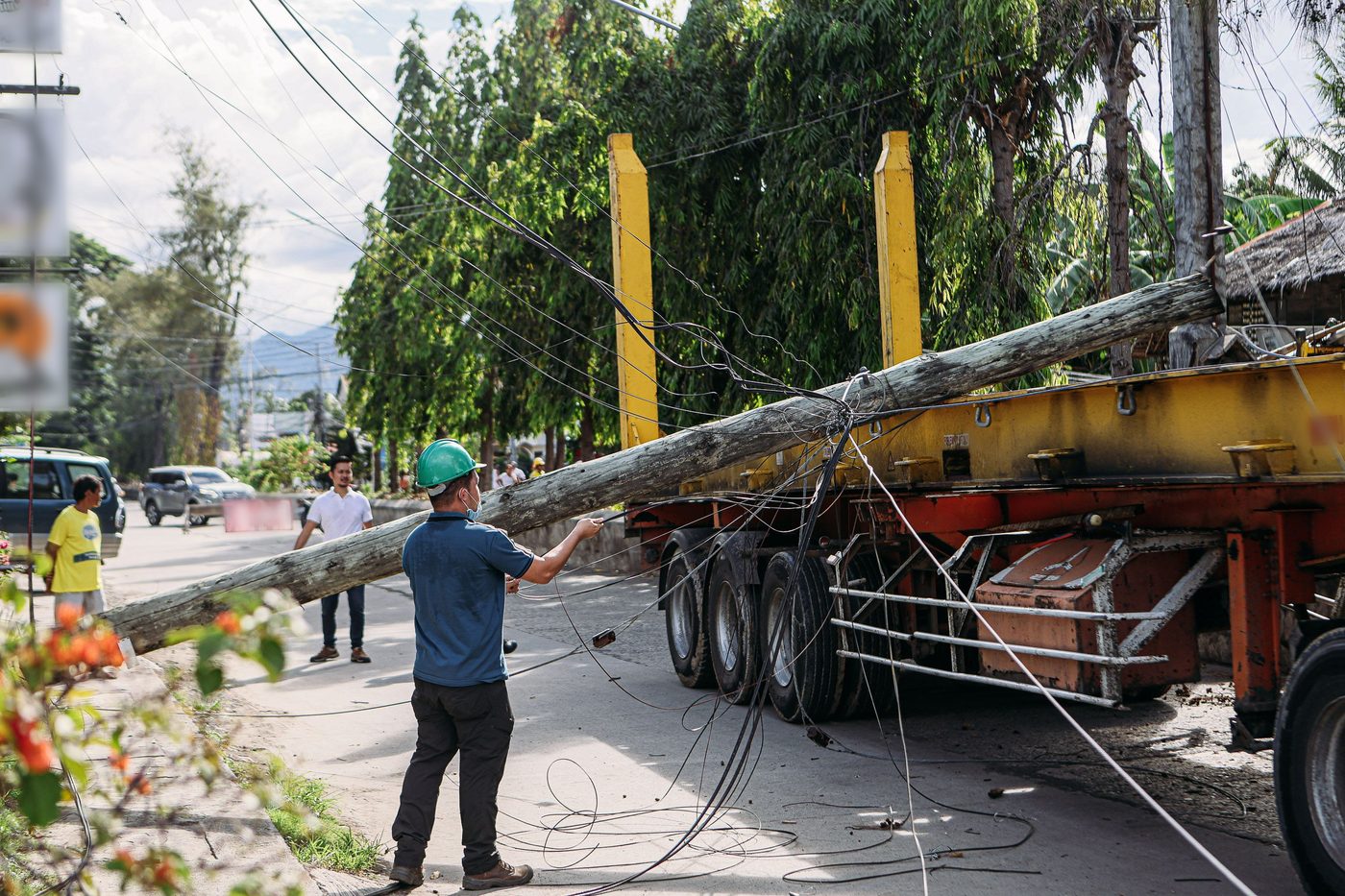
Police Reports
A police report can document important details about the crash, including the location, vehicles involved, statements from drivers and witnesses, and the responding officer’s observations. It can provide an early record of what was reported after the accident.
Medical Records
Medical records can document the injuries you suffered, the treatment you received, and the medical expenses connected to the crash. They can also help show the extent and duration of your injuries.
Photographs and Videos
Photos and videos can capture vehicle damage, road conditions, traffic signals, weather conditions, skid marks, and other details that may change or disappear after the crash. Dashcam, surveillance, and phone footage may also provide useful evidence.
Witness Statements
People who saw the accident may be able to describe what happened before, during, or immediately after the collision. Their statements can help clarify details that may not be clear from photographs or the police report alone.
Truck Driver Records
Records relating to the truck driver may provide information about driving hours, qualifications, training, and compliance with applicable requirements. These records can become particularly relevant when driver conduct or fatigue is part of the dispute.
Electronic Logging Data
Commercial truck drivers generally use electronic logging devices (ELDs) to record driving activity. The Federal Motor Carrier Safety Administration (FMCSA) explains that ELDs record a driver's hours of service, which can make this information relevant when driver fatigue or hours-of-service compliance is an issue.
Maintenance and Inspection Records
Maintenance and inspection records can help show whether the truck was properly maintained and whether mechanical problems were identified before the crash. This may matter when issues involve brakes, tires, steering, lights, or other equipment.
Cargo and Loading Records
Records showing how cargo was loaded, secured, and distributed can be important in crashes involving shifting, unsecured, or improperly balanced loads. These records may help determine whether cargo handling contributed to the accident.
Company Policies and Employment Records
A truck company's policies, training materials, and employment records may show how drivers were hired, trained, supervised, and expected to operate their vehicles. Depending on the circumstances, these records may become relevant to questions about the company's potential responsibility.
Accident Reconstruction Evidence
In more complicated truck accident cases, accident reconstruction experts may examine vehicle damage, photographs, measurements, road conditions, witness accounts, and other evidence to help determine how the collision occurred. Their analysis may address issues such as vehicle speed, braking, impact points, and the sequence of events.
Because some of this evidence may be held by the trucking company, driver, insurers, or other third parties, identifying and preserving relevant records early can be important to a truck accident claim.
What Compensation Can You Seek After a Truck Accident?
If you are injured in a truck accident caused by someone else, you may be able to seek compensation for the losses caused by the crash. The types and amount of damages available will depend on the facts of the accident, the severity of your injuries, and the losses you can establish.
Medical Expenses
You may be able to seek compensation for medical expenses related to your truck accident injuries. This can include emergency care, hospital bills, doctor visits, medication, physical therapy, and other necessary treatment.
Future Medical Care
Some truck accident injuries require ongoing treatment or future medical care. If your injuries are expected to require additional treatment, those future medical needs may be considered when determining your damages.
Lost Wages
If your injuries prevent you from working, you may be able to seek compensation for income you lost because of the accident. This may include wages lost while recovering or attending medical appointments.
Loss of Future Earning Capacity
A serious injury can sometimes affect your ability to work or earn the same income in the future. Depending on the circumstances, you may be able to seek damages for a reduced future earning capacity.
Property Damage
Compensation may also cover damage to your vehicle and other personal property damaged in the collision. The amount can depend on the extent of the damage and the cost of repairs or replacement.
Pain and Suffering
A truck accident can cause physical pain and affect your daily life long after the initial crash. Compensation for pain and suffering may take into account the physical effects of an injury and how it affects your quality of life.
Emotional Distress
Some people experience emotional harm after a serious truck accident, such as anxiety, fear, or other distress. California courts note that personal injury claims can seek compensation for emotional harm, along with medical bills, lost wages, and other losses caused by an injury.
Other Losses Depending on the Circumstances
Depending on the facts of the case, there may be other losses that can be considered as part of a personal injury claim. California courts advise people to consider both immediate and future problems caused by an injury when identifying potential damages.
There is no single settlement amount that applies to every truck accident case. The potential compensation depends on factors such as the injuries involved, financial losses, future needs, available evidence, and the circumstances surrounding the accident.
Do You Need a Truck Accident Lawyer to File a Lawsuit?
You are not automatically required to hire a lawyer to file a truck accident lawsuit in California. However, legal representation may be particularly helpful when you have serious injuries, significant damages, disputed liability, or multiple parties who may be responsible for the crash. California courts note that legal help can be especially useful when an injury is severe, responsibility is unclear, or the case is complicated.
Accident claims in California can also involve more than the driver. The trucking company may have its own insurer and legal team, while important evidence such as electronic logging data, maintenance records, inspection records, and company documents may be held by other parties. A lawyer can help investigate the accident, request relevant evidence, and handle negotiations or litigation when needed. Truck crashes on I-10 or I-15 often involve several companies, and a San Bernardino personal injury lawyer can help find all of them.
Legal help may also be useful when a government entity could be involved. Claims against government agencies can have different procedures and shorter deadlines, so it is important to understand the requirements that apply to your specific situation. California Courts provides information about when legal help may be useful in a personal injury case and the steps involved in civil lawsuits.
Whether you need a lawyer ultimately depends on the circumstances of your case. Some people choose to handle their claims themselves, while others seek legal representation when the injuries, evidence, potential damages, or legal issues make the case more difficult to navigate.
How Long Does a Truck Accident Lawsuit Take in California?
There is no fixed timeline for a truck accident lawsuit in California. Some cases may resolve through a settlement before reaching trial, while others can take longer because of the injuries involved, the involved parties, or disagreements over who was responsible.
The severity of the injuries can affect how long a case takes, especially when ongoing treatment or future medical care is involved. Cases involving multiple defendants or complicated questions about liability may also require more investigation and evidence before the parties can determine how to proceed.
Once a lawsuit is filed, the discovery process may involve gathering documents, reviewing records, taking depositions, and obtaining other evidence. Settlement negotiations can happen during this process, but if the parties cannot reach an agreement, court scheduling and the availability of a trial date can add more time.
Ultimately, the length of a truck accident lawsuit depends on the specific circumstances of the case and whether it is resolved through settlement or proceeds to trial.
Need a California Truck Accident Lawyer?
After a California truck accident, start by documenting the crash, getting medical attention, and gathering evidence that may help identify who was responsible. From there, the process may involve determining potentially liable parties, meeting the applicable filing deadlines, filing a complaint, serving the defendants, and handling settlement negotiations or proceeding to trial if the case is not resolved.
If you are unsure about what to do next, My Injury Pros can help you understand your legal options after a truck accident. Our team can review the details of your accident, explain the claims process, and help you understand what steps may apply to your situation. Contact My Injury Pros to schedule a consultation and discuss your truck accident case.
Frequently Asked Questions
Truck accident lawsuits can involve different deadlines, documents, costs, and legal steps depending on the circumstances. Here are answers to some common questions about filing and pursuing a truck accident lawsuit in California.
How long do I have to file a truck accident lawsuit in California?
California generally allows two years from the date of injury to file a personal injury lawsuit, but exceptions can apply. Claims involving government entities and certain tolling situations may have different deadlines, so the specific facts of your case matter.
Can I sue the trucking company after an accident?
You may be able to pursue a claim against the trucking company if there is evidence that it may be legally responsible for the accident or your injuries. Whether the company can be held responsible depends on factors such as the driver's employment relationship, company conduct, and the circumstances of the crash.
What documents do I need to file a truck accident lawsuit?
Documents may include the police report, medical records and bills, photographs or videos, insurance information, wage records, and other evidence related to the accident and your losses. Truck accident cases may also involve records such as electronic logging data, maintenance records, inspection records, and cargo documents.
Do I have to go to court if I file a truck accident lawsuit?
Not necessarily. Many cases are resolved through settlement negotiations or mediation, but you may need to attend court if the case cannot be resolved and proceeds to trial.
What happens after I file a truck accident lawsuit?
After the complaint is filed, the defendants generally must be formally served and given an opportunity to respond. The case may then move through discovery, settlement negotiations, motions, and potentially a trial if the parties do not reach an agreement.
How much does it cost to file a truck accident lawsuit in California?
The cost of filing a lawsuit can vary depending on the court and the circumstances of the case. There may be court filing fees and other costs associated with pursuing a lawsuit, so it is important to discuss the potential expenses with a lawyer before filing.
Can I still file a lawsuit if the trucking company's insurance offered me a settlement?
Receiving a settlement offer does not necessarily mean you have to accept it or give up your right to pursue other legal options. Before accepting or signing anything, consider having the offer and your potential claim reviewed so you understand what rights you may be giving up.