
A personal injury lawsuit begins when an individual suffers harm due to another person's negligence and chooses to pursue compensation. Typically, the process entails filing a claim, collecting evidence, negotiating with insurance, and potentially proceeding to court if a settlement remains elusive. It can take months or even years, so having clear documentation and a knowledgeable lawyer by your side makes a big difference.
Ever wondered how a personal injury lawsuit actually works? At My Injury Pros, our experienced team of personal injury lawyers guides clients through every step, from filing a claim to negotiating settlements or representing you in court. We combine deep legal knowledge with personalized support to protect your rights and maximize your compensation. Contact us today for a free consultation and let us help you navigate your case with confidence.
In this blog, we will walk you through the steps, timeline, and key requirements of a personal injury lawsuit in a clear and easy-to-understand way.
What Is A Personal Injury Lawsuit?

A personal injury lawsuit is a legal case that happens when someone is harmed because of another person’s actions or negligence by a negligent party. In simple terms, it is a way for the injured person or injured party to ask a court for help in getting monetary compensation for their losses.
This type of case falls under civil law, meaning it focuses on resolving disputes between individuals or organizations in civil court rather than punishing a crime. Legally, it begins when the injured person files a claim or legal claim stating that another party is legally responsible for their injury and should be held accountable.
There are also different types of personal injury claims that fall under this legal process. Common examples include car accidents, slip and fall incidents, workplace injuries, medical malpractice, and defective product claims involving product liability.
Each claim type follows the same basic idea: the plaintiff must show that the defendant’s actions caused harm and resulted in damages, including economic and non-economic damages. While many cases settle before reaching court through alternative dispute resolution, a personal injury lawsuit provides a structured way to seek compensation and recover losses when needed.
How Do You Prove Negligence?
Proving negligence in a personal injury case might seem complicated, but it follows a clear process under legal representation. It’s about showing someone failed to act responsibly, and that failure caused harm by an at-fault party. Understanding the steps makes it easier to see how liability is established and who is legally responsible. Let’s break down the key methods used to prove negligence using all the evidence.
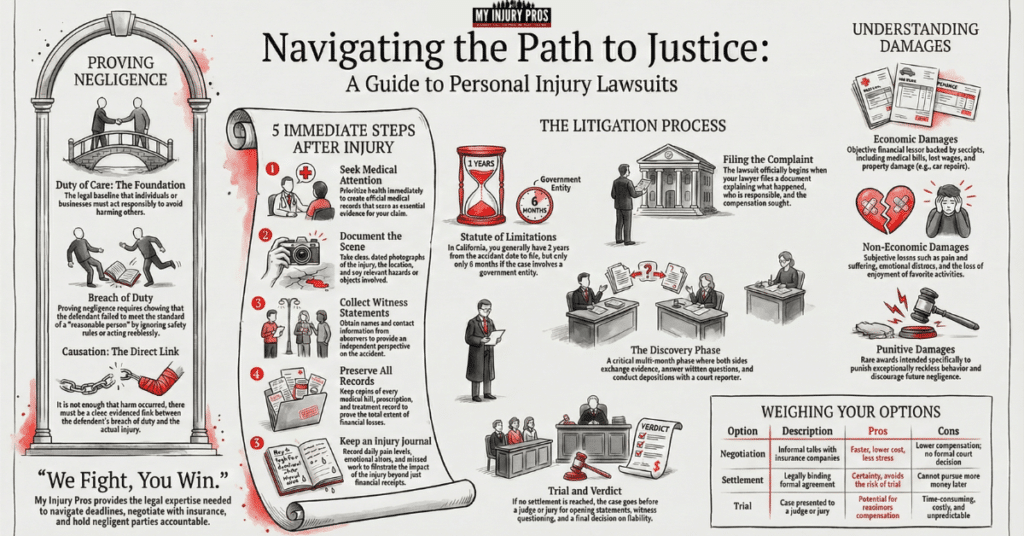
1. Duty of Care: The Foundation of Responsibility
Duty of care means a person or business must act in a way that avoids harming others and follow traffic laws where applicable. Everyone owes this duty in different situations, like drivers to other drivers or doctors to patients. It sets the baseline for what’s considered responsible behavior and who may be legally responsible.
2. Breach of Duty: When Rules Are Broken
A breach of duty happens when someone fails to meet that standard. This could be ignoring safety rules or acting recklessly. Courts look at what a reasonable person would have done in the same situation.
3. Causation: Linking Action to Harm
Causation shows that the breach directly caused the injury or damage. It’s not enough that harm occurred; there must be a clear link to the action. Evidence like medical records, photos, and witness testimony helps make this connection.
4. Putting It All Together: Proving Negligence
To prove negligence, you show all three elements: duty, breach, and causation. Collecting solid evidence at each step strengthens your case, including police reports where available. When done carefully, these steps clearly establish liability.
What Steps To Take After An Injury?

With over 26 million emergency department visits in the U.S. each year for unintentional injuries, it’s clear that accidents are common, and the impact can be serious. Taking the right steps immediately afterward can make a big difference if you decide to pursue a personal injury claim or understand the role of a state-mandated insurance program.
Acting quickly protects your health and helps preserve crucial evidence that supports your case. To ensure proper documentation after an injury, we recommend following the key steps below.
Step 1. Seek Medical Attention
Your health comes first. Even if the injury seems minor, seeking medical treatment ensures you receive proper care and creates official medical records. These records can later serve as essential evidence to support your claim.
Step 2. Document the Scene and Injury
Take clear photographs of the injury, the location where it happened, and any relevant objects or hazards involved, including where the accident happened. Visual evidence can help establish the circumstances of your injury. Keep these photos organized and dated for reference.
Step 3. Collect Witness Statements
If anyone saw what happened, ask for their names and contact information. Try to get a brief written or recorded account of what they observed, especially from accident victims nearby. Witness statements provide an independent perspective that strengthens your case.
Step 4. Preserve Medical Records and Receipts
Keep copies of all medical bills, prescriptions, and treatment records related to your injury. This documentation helps to prove the extent of the plaintiff's injuries. Organized records make it easier for your lawyer to build a strong case.
Step 5. Keep a Personal Injury Journal
Write down how the injury affects your daily life, including pain levels, emotional stress, and missed work. Detailed notes can help illustrate the impact of the injury beyond just medical bills, including emotional harm. This personal account can be a powerful piece of evidence in court or settlement demand negotiations.
Statute of Limitations and Deadlines for Personal Injury Lawsuits
If you’ve been injured in California, it’s important to know that there’s a time limit for filing a personal injury lawsuit, called the statute of limitations. For most personal injury cases, you generally have two years from the date of the accident to file a claim in court or begin the trial process. Missing this deadline can prevent you from pursuing compensation, even if your case is strong, so acting promptly is key.
Certain situations have different rules. For example, if your injury involves a government entity, like a city or state agency, the deadline is usually six months, and special notice must be given through a demand letter before filing a lawsuit.
Furthermore, if the injury wasn’t discovered immediately, California law allows for a “discovery rule,” which can extend the deadline in some cases. These exceptions can get tricky, which is why consulting an experienced attorney early is so helpful.
Keeping track of deadlines protects your right to file and gives your attorney time to gather evidence, talk to witnesses, and build a strong case with all the evidence. Even if you’re uncertain about whether your situation qualifies as a personal injury claim, contacting My Injury Pros sooner rather than later helps you secure compensation. A knowledgeable lawyer can guide you through the process and provide proper legal representation to make sure your case stays on track.
Many personal injury cases go better when you contact a lawyer right away. For instance, someone injured in a rear-end car accident received full coverage for medical bills and lost wages after documenting their injuries and calling a lawyer within days, supported by a clear insurance claim.
In a separate case, another person quickly reached out after a dog bite and received settlements that covered their medical costs and time off work through a fair settlement. Acting fast, keeping records, and having an experienced attorney on your side can make a big difference in your case.
How Does The Personal Injury Lawsuit Process Work?
The personal injury lawyer process follows a clear sequence of events, even though it may feel overwhelming at first. It usually begins with a consultation, where your lawyer reviews your case and explains your legal options.
If the case cannot be settled early, it moves into litigation, which is the formal court process of resolving a dispute. At this stage, your lawyer prepares the case by gathering evidence, identifying the responsible party, and building a strong claim on your behalf.
The lawsuit officially starts when your lawyer files a complaint in court. This document explains what happened, who is responsible, and what compensation you are seeking from the other party. After the defendant responds, the case enters the discovery phase, which is one of the most important parts of the process known as the discovery process.
During discovery, both sides exchange information, collect evidence, and ask questions through tools like documents, written questions, and depositions with a court reporter. This phase can take months or longer because it helps both sides understand the strengths of the case and prepare for what comes next.
If no settlement is reached after discovery, the case moves forward to trial. At trial, both sides present their evidence, question witnesses, and make arguments through opening statements before a judge or jury. The court then decides whether the defendant is responsible and how much compensation should be awarded after jury deliberation. While many personal injury cases settle before this stage, the full process ensures that you have a structured path to seek justice and hold the other party accountable.
Types of Compensation (Damages Explained)

Understanding the different types of compensation, also called damages, can make a big difference when you’re trying to figure out what your case is worth. Economic damages are the most straightforward because they cover actual financial losses and economic and non-economic damages.
Think of things like medical bills, lost wages from missing work, or the cost of fixing your car after an accident, including property damage. These are backed by receipts and records, so they’re easier to calculate and often form the foundation of your claim.
But not all losses come with a receipt. Some affect how you feel and live every day. That’s where non-economic damages come in. These cover pain and suffering, emotional distress, and the ways your injury may have changed your daily life, including physical pain and emotional harm. Maybe you can’t enjoy your favorite activities anymore, or you’re dealing with ongoing stress. Those experiences matter, even if they’re harder to put a number on.
In rare situations, punitive damages may also apply. These are meant to punish especially reckless or harmful behavior by a negligent party and discourage it from happening again. When damages are calculated, factors like the seriousness of your injury, your recovery, and how your life has been affected all come into play, along with financial losses. Understanding this process helps you see the full picture and why your case truly matters.
Traffic accidents are one of the most common causes of personal injury. Data from California reveals that motor vehicle crashes injured over 200,000 people in a recent year. Workplace injuries are also a frequent source of claims, with California employers reporting more than 344,000 non-fatal workplace injuries and illnesses annually. These numbers show just how easily accidents can happen and why documenting your injury is so critical.
Negotiation vs. Settlement vs. Trial: Weighing Your Options
When it comes to a personal injury claim, deciding how to pursue compensation can feel overwhelming. You don’t have to go to court right away; there are several ways to resolve a case, each with its own benefits and trade-offs. Understanding the differences between negotiation, settlement, and trial can help you make an informed decision and work with your attorney to choose the best path for your situation.
Why Do You Need An Experienced Attorney?
An experienced attorney plays a key role in guiding you through a personal injury case and protecting your rights from start to finish. We always remind clients, "It’s not just about money but about accountability and getting your life back on track.”
Legal situations can be complex, especially when you are dealing with injuries, paperwork, and deadlines at the same time, making an initial consultation important. This is where proper legal advice and strong representation become important, often through trusted personal injury law firms.
A skilled attorney understands the law, explains your options clearly, and helps you avoid mistakes that could affect your case. They also handle the legal process for you, so you can focus on recovery instead of stress.
One of the biggest advantages of having an experienced attorney is their expertise in personal injury law. They know how to assess your case, gather evidence, and determine the full value of your claim, including future costs and damages, supported by all the evidence.
Their negotiation skills are also critical, especially when dealing with insurance companies that may try to offer less than you deserve through the insurance claims process. A lawyer can push for a fair settlement and is prepared to take the case further if needed. Without this level of expertise, it is easy to undervalue your claim or miss important details.
Beyond expertise and negotiation, a personal injury lawyer provides ongoing legal support throughout your case. They manage communication, handle documents, and represent your interests in court if the case goes to trial with strong legal representation.
This kind of representation ensures that your case is presented clearly and professionally in civil court, giving you a better chance of a positive outcome. Ultimately, an experienced lawyer can affect your case's outcome and your compensation.
Ready to Seek Justice Through a Personal Injury Lawsuit?
Understanding the steps involved in a personal injury lawsuit is essential for navigating the legal process with confidence. From filing your claim to reaching a settlement or proceeding to trial, each stage requires careful attention to detail and expert guidance through the lawsuit process.
By consulting a personal injury attorney, you can familiarize yourself with the process. You can also better advocate for your rights, understand the entire process, and pursue the compensation you deserve.
Curious about what happens after filing a personal injury lawsuit? My Injury Pros helps you understand the entire process, from gathering evidence to navigating negotiations or court proceedings. Our skilled attorneys provide clear guidance and strong advocacy to protect your interests. Reach out today for a free consultation and get the support you need to move forward confidently.
Frequently Asked Questions
If you still have questions about how a personal injury lawsuit works, these frequently asked questions can help. They provide simple answers to help you better understand the process.
What Are the Steps Involved in Filing a Personal Injury Lawsuit?
Filing a personal injury lawsuit starts with speaking to a lawyer and investigating your case. Your lawyer then files a complaint, both sides go through the discovery phase, and the case may settle or proceed to trial.
How Long Does It Take to Settle a Personal Injury Lawsuit?
The timeline can vary depending on the complexity of the case and whether it settles early or goes to court. Some cases resolve in a few months, while others can take a year or more to reach a final outcome.
Do I Need a Lawyer to File a Personal Injury Lawsuit?
You are not required to have a lawyer, but having one can make a big difference in your case. A lawyer provides legal advice, handles negotiations, and helps you pursue fair compensation.
What Types of Compensation Can I Receive in a Personal Injury Lawsuit?
You may receive compensation for medical expenses, lost wages, and property damage. In some cases, you can also recover damages for pain, suffering, and emotional distress.
Can I File a Personal Injury Lawsuit if the Accident Was Partially My Fault?
Yes, you can still file a claim even if you were partly at fault for the accident. Your compensation may be reduced based on your level of responsibility, depending on the laws in your state.
Disclaimer: The information provided on this blog is for general informational purposes only and does not constitute legal advice. Reading this content does not create an attorney-client relationship. Laws and regulations vary by jurisdiction and may change over time, so you should consult a qualified personal injury attorney directly for advice regarding your specific situation. Past examples, case studies, or hypothetical scenarios are illustrative only and do not guarantee similar results.