Short answer
Start with the insurer, but the step riders miss is the DMV. An SR-1 report is due within 10 days when anyone is injured or killed or property damage passes $1,000, whatever the cause (Vehicle Code 16000). Partial blame is not a bar: California uses pure comparative negligence, so $500,000 in damages at 20 percent fault still yields $400,000. The filing deadline is two years (CCP 335.1).
If you’ve been injured in a motorcycle accident in California, you can file a claim by reporting the accident, getting medical care, gathering evidence, and notifying the appropriate insurance company. This is especially important if you’re dealing with medical bills, lost income, motorcycle damage, or other losses caused by the crash. Taking action early can help protect your claim and give you a better chance of recovering the compensation you may be entitled to under California law. Riders hurt in San Diego can talk with a personal injury attorney in San Diego about what comes next.
My Injury Pros handles motorcycle accident cases by investigating the crash, gathering evidence, dealing with insurance companies, and building a claim around the details of each case. Clients also have access to dedicated case managers and a legal team that can work with medical professionals, accident reconstructionists, and other experts when needed. The firm offers free consultations and works on a no-win, no-fee basis, so if you’ve been injured in a motorcycle accident, contact us at My Injury Pros today to discuss your case.
Filing a motorcycle accident claim in California can feel overwhelming, especially when you’re already dealing with injuries and the aftermath of a crash. This article gives you a clear overview of what the claims process looks like and what you should know as you move forward. Pacific Coast Highway sees a lot of these crashes. A Huntington Beach personal injury lawyer can look at your claim.
What You Should Do Immediately After a California Motorcycle Accident?
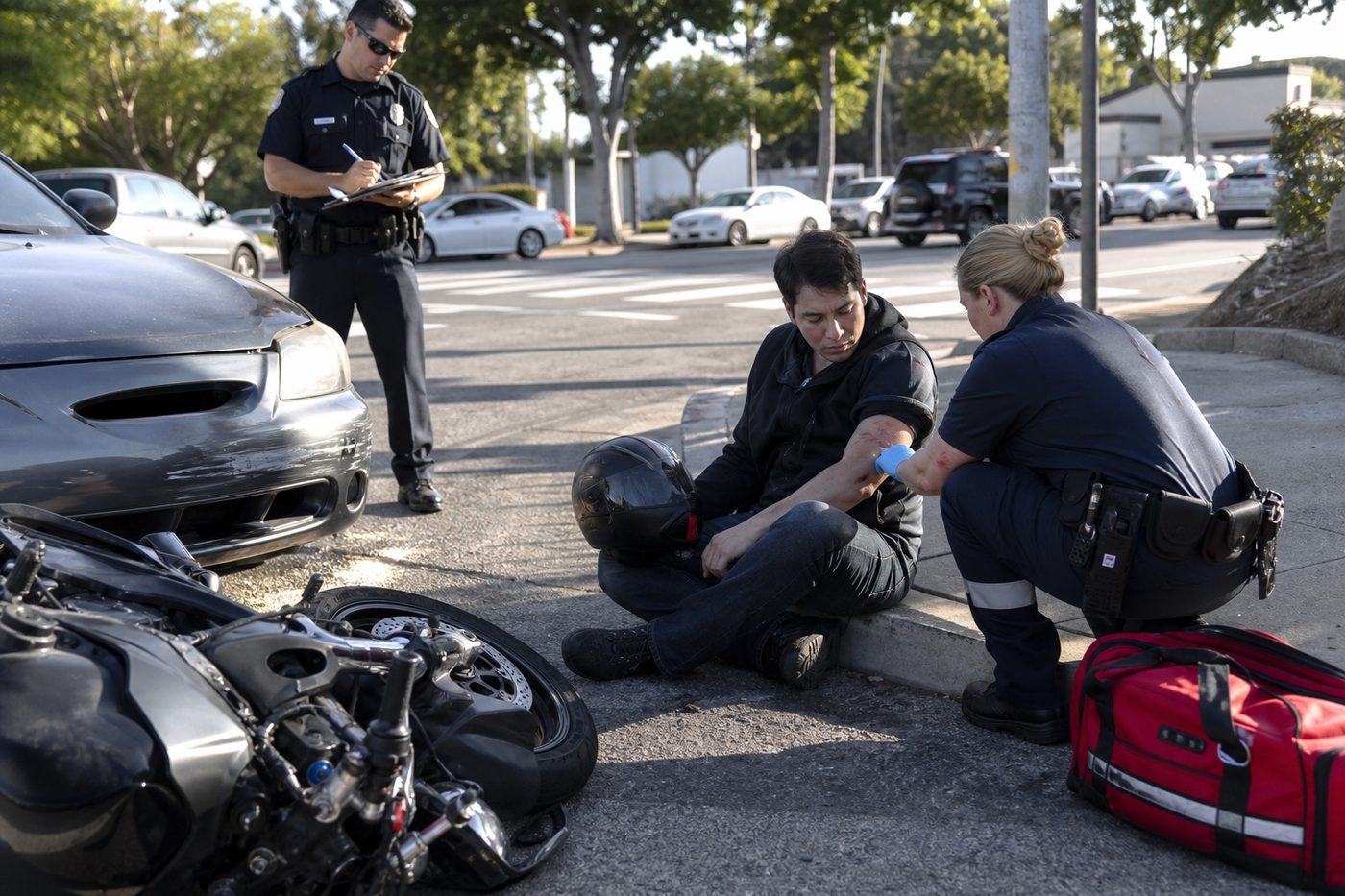
The first few minutes after a motorcycle accident can be stressful, but focusing on your safety and getting help should come first. California’s DMV recommends calling 911 when someone is hurt, and moving out of traffic only when it is safe to do so. Once you are safe, get medical attention as soon as possible, even if your injuries seem minor. Some injuries may not be obvious right away, and having your injuries evaluated also creates medical documentation that can be important when you file a claim.
If you can safely do so, take photos or videos of the accident scene, the motorcycles and other vehicles involved, road conditions, traffic signs, and your visible injuries. Get the names, witnesses contact information,witness statement and keep any information that could help establish what happened, including available traffic-camera footage as well as police reports; California’s Department of Insurance also recommends photographing the scene and collecting witness and driver information after an accident.
Be careful about what you say after the crash, especially when speaking with the other driver’s insurance company. Avoid admitting fault, guessing about what caused the accident, or giving a recorded statement before you understand your rights and the details of your claim; the California Department of Insurance notes that insurers may request written or recorded statements as part of their investigation.
You may also need to file an SR-1 report with the California DMV within 10 days if anyone was injured or killed, or if property damage was more than $1,000. This requirement applies regardless of who caused the accident, and filing an SR-1 is separate from any report made to law enforcement or an insurance company.
What California Laws Can Affect Your Motorcycle Accident Claim?
California has specific rules for motorcycle riders, and what happened before and during a crash can affect how responsibility is determined. Understanding these rules can help you see how things like helmet use, lane splitting, and the timing of your claim may come into play when seeking compensation.
How Helmet Use and Lane Splitting Can Affect Your Claim
California requires motorcycle riders and passengers to wear a compliant safety helmet, and lane splitting is legal when it is done safely and prudently. If an accident involves questions about speed, lane position, helmet use, or another safety rule, those details may become part of the investigation into how the crash happened and who may be responsible. This does not automatically mean a rider who violated a traffic rule cannot recover compensation; the specific facts of the accident matter.
How Long Do You Have to File a Motorcycle Accident Lawsuit in California?
If you are seeking compensation for personal injuries after a motorcycle accident, California generally gives you two years from the date of the injury to file a lawsuit. Waiting too long can make a claim harder to prove as evidence and witness memories become less reliable, and missing the applicable deadline can mean losing the ability to bring the lawsuit altogether. Insurance companies may also contact you early about resolving your claim, so it is important to understand the extent of your injuries and your legal options before agreeing to a settlement.
How Does Comparative Negligence in California Affect Your Compensation?
After a motorcycle accident, it is not always as simple as one person being completely at fault. California uses a comparative negligence rule, which means your compensation can be reduced based on your share of responsibility for the accident.
How Pure Comparative Negligence Works
California follows a pure comparative negligence system, so you may still be able to recover compensation even if you were mostly responsible for the accident. For example, if your total damages are $500,000 and you are found to be 20% at fault, your potential recovery could be reduced by 20%, leaving $400,000.
Why Evidence Matters When Fault Is Disputed
Evidence can make a big difference when an insurance company questions who caused the crash or how serious your injuries are. Insurers may challenge fault, question medical records, or take time responding to a claim, which is why it helps to have strong documentation from the beginning.

My Injury Pros looks closely at the details of the accident, builds a clear timeline of what happened, and gathers medical documentation to support the injuries and losses involved. The goal is to stay ahead of the opposition, so you are not left trying to prove your case after important evidence has already been lost.
What Steps Should You Take to File a Motorcycle Accident Claim in California?
Filing a motorcycle accident claim is more than simply calling an insurance company and asking for payment. You need to build a clear picture of what happened, document how the accident affected you, and be careful about what you say throughout the process.
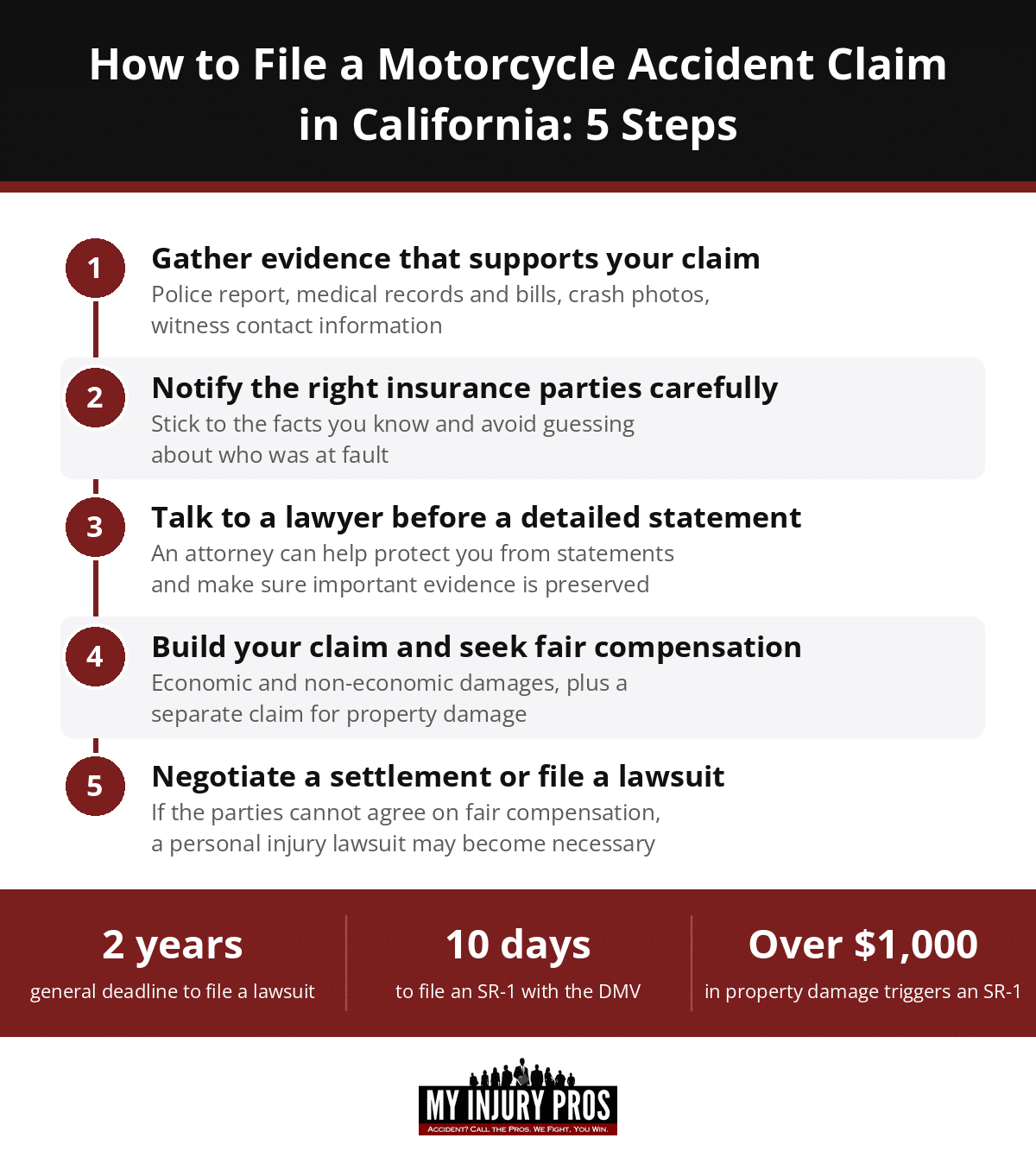
Step 1: Gather Evidence That Supports Your Claim
Start by collecting anything that can help show what happened and how the accident affected you. This can include the police or official accident report, medical records and bills, photos of the crash scene and motorcycle damage, and contact information for anyone who witnessed the accident. It is also important to identify everyone who may have legal responsibility for your injuries, which could include the at-fault driver, their insurance company, or another party, depending on the circumstances of the crash.
Keep track of your medical treatment as you go, including recommended future care. This is particularly important when an accident results in serious injuries such as spinal cord injuries, traumatic brain injuries, or other catastrophic injuries, where the full impact may not be clear right away.
Step 2: Notify the Right Insurance Parties Carefully
Once you have the basic information about the accident, you will need to notify the appropriate insurance company or companies. Report the accident within the applicable timeframe under your policy and California requirements, but remember that reporting a crash is different from agreeing to a settlement or accepting responsibility.
When speaking with an insurance adjuster, stick to the facts you know and avoid guessing about who was at fault. Do not downplay your injuries or sign documents you do not fully understand, especially before you know the extent of your losses.
Step 3: Talk to a Motorcycle Accident Lawyer Before Giving a Detailed Statement
If the insurance company starts questioning your version of events or the seriousness of your injuries, having a lawyer involved can take some of that pressure off your shoulders. An attorney can help protect you from statements that could be used against your claim, make sure important evidence is preserved, and help address complicated injuries such as spinal cord injuries, traumatic brain injuries, and other catastrophic injuries.
This can be especially helpful when your injuries require ongoing treatment or when there is a dispute over who was responsible for the crash. The sooner important evidence is identified and preserved, the less chance there is of losing information that could matter later.
Step 4: Build Your Claim and Seek Fair Compensation
Your claim should account for the losses you have actually experienced because of the accident. Economic damages may include medical expenses, future medical care, lost wages, and reduced earning capacity, while non-economic damages can include pain and suffering, emotional distress, significant injuries and loss of enjoyment of life.
You may also have a separate claim for property damage, including the value of your motorcycle and other damaged belongings. An insurance company may make an early settlement offer, but accepting it too quickly could leave you responsible for future expenses that were not fully considered.
Step 5: Negotiate a Settlement or File a Lawsuit
Once the claim has been documented and submitted, the insurance company may negotiate with you or your attorney to reach a settlement. Many injury claims are resolved through negotiations, but if the parties cannot agree on fair financial compensation, filing a personal injury lawsuit may become necessary.
A lawsuit does not always mean the case will go to trial, as the parties can continue negotiating or reach a settlement during the litigation process. The right path depends on the facts of the accident, the evidence available, the extent of the injuries, and how the other side responds to the claim.
What Common Mistakes Do California Motorcycle Accident Victims Make?
After a motorcycle crash, it is easy to make decisions before you know the full extent of your injuries or losses. A few common mistakes can make it harder to document your claim, negotiate with an insurer, or recover the compensation you may be entitled to.
Accepting the First Settlement Offer
An early settlement offer may look appealing when you have mounting medical bills, and you want to move on from the accident. But it may not account for ongoing treatment, lost income, future medical expenses, physical therapy, or the full extent of your injuries, which is why it is important to understand your losses before accepting an offer. Once you settle a claim, you generally cannot go back and ask for more money for the same injuries, so make sure you understand what you are giving up before signing anything so you can get the maximum compensation.
Not Getting Immediate Medical Attention
Even if you feel okay after a motorcycle accident, getting checked by a medical professional as soon as possible can help identify injuries and create a record of your treatment. Medical records can also help connect your injuries to the crash and document the care you needed afterward. Waiting too long may give an insurance company an opportunity to question whether an injury was actually caused by the accident.
Giving a Recorded Statement Too Soon
An insurance adjuster may ask you to provide a recorded statement while investigating the accident. California’s Department of Insurance confirms that insurers may take written or recorded statements as part of the claims process, along with documentation of injuries, medical expenses, and lost wages. Before giving a detailed statement, make sure you understand what you are being asked and how your answers could affect your claim.
Admitting Fault
You may know that you made a mistake before the crash, but avoid making quick statements about who was responsible or saying things like “the accident was my fault.” California uses pure comparative negligence, so your share of responsibility can affect the amount you recover without necessarily preventing you from recovering compensation altogether. Let the evidence establish what happened instead of making assumptions about fault at the scene or during an insurance conversation.
Waiting Too Long to Act
Time matters after a motorcycle accident, not only because evidence and witness memories can become harder to preserve, but also because legal deadlines apply to injury claims. In California, you generally have two years from the date of a personal injury to file a lawsuit, although exceptions and different deadlines can apply depending on the circumstances. Waiting until the deadline is close can leave less time to investigate the accident, gather medical records, and determine who may be responsible.
What Happens If You File a Motorcycle Accident Claim Late?
Acting sooner after a motorcycle accident can make it easier to document what happened and understand the full extent of your losses. Waiting does not automatically prevent you from filing a claim, but it can create practical challenges with evidence, medical records, insurance negotiations, and legal deadlines.
What Should You Do After a Motorcycle Accident in California?
After a motorcycle accident, taking action early can make a difference in how well your claim is documented and handled. From getting medical attention and preserving evidence to communicating carefully with insurers and working with an attorney, each step can help you pursue the compensation you may be entitled to instead of leaving important decisions in the hands of the insurance company.
If you’re unsure what to do next, schedule a free consultation with My Injury Pros to discuss your motorcycle accident and your options. My Injury Pros works on a no-win, no-fee basis, so you don’t pay attorney fees unless the firm recovers compensation for you.
Frequently Asked Questions
Here are quick answers to common questions about filing a motorcycle accident claim, dealing with insurance, and seeking compensation after a crash.
What Steps Do I Need to File a Motorcycle Accident Claim in California?
Gather evidence from the accident, get medical treatment, notify the appropriate insurance company, and keep records of your injuries and losses. You can then work with an attorney to review your claim, negotiate with the insurer, and determine whether filing a lawsuit is necessary.
Do I Need a Motorcycle Accident Lawyer to File a Claim?
You can file a claim without a lawyer, but legal help can be useful when you have serious injuries, disputed fault, or an insurance company challenging your claim. Speaking with an attorney early can also help you avoid harmful statements and protect important evidence.
What Compensation Can I Seek After a Motorcycle Accident?
Depending on your case, you may seek compensation for medical expenses, future medical treatment, lost wages, reduced earning capacity, property damage, pain and suffering, emotional distress, and loss of enjoyment of life. Serious injuries may also require compensation for long-term treatment and ongoing care.
How Does California Comparative Negligence Affect My Claim?
California allows you to recover compensation even if you were partly responsible for the accident, but your recovery can be reduced by your percentage of fault. For example, if you have $500,000 in damages and are found 20% at fault, your potential recovery could be reduced to $400,000.
How Long Do I Have to File a Motorcycle Accident Lawsuit in California?
California generally gives you two years from the date of the injury to file a personal injury lawsuit, although exceptions and different deadlines may apply. Acting sooner can also help preserve evidence, medical records, and witness information that may support your claim.
Disclaimer: The information in this article is for general informational purposes only and is not intended to be legal advice. Every motorcycle accident case is different, and the laws, deadlines, and potential compensation that apply to your situation may depend on the specific facts of your case. For advice about your legal rights and options, speak with a qualified California personal injury attorney.