
Short answer
Yes. Immigration status does not bar an injury lawsuit. In New York, the Court of Appeals held in Balbuena v. IDR Realty LLC (2006) that federal immigration law does not stop an undocumented worker hurt by a Labor Law violation from claiming lost wages, absent proof of false work papers.
Personal injury lawsuits in the U.S. allow individuals to pursue compensation for injuries sustained due to someone else’s negligence. A common misconception is that undocumented immigrants cannot file these claims or that doing so will automatically lead to deportation.
Yes, illegal immigrants can sue for personal injury cases under U.S. law. Immigration status does not affect a person’s right to seek compensation for injuries caused by someone else’s negligence.
Injured but afraid to take legal action due to immigration status? At My Injury Pros, we believe everyone deserves justice. Our experienced team of personal injury attorneys understand the challenges undocumented immigrants face and will protect your rights with full confidentiality. Get the compensation you deserve, safely. Contact us today for a free consultation.
This post will explain the legal rights of undocumented immigrants in personal injury cases, the types of compensation they can claim, and how they can safely navigate the legal system.
Legal Rights of Illegal Immigrants in Personal Injury Cases
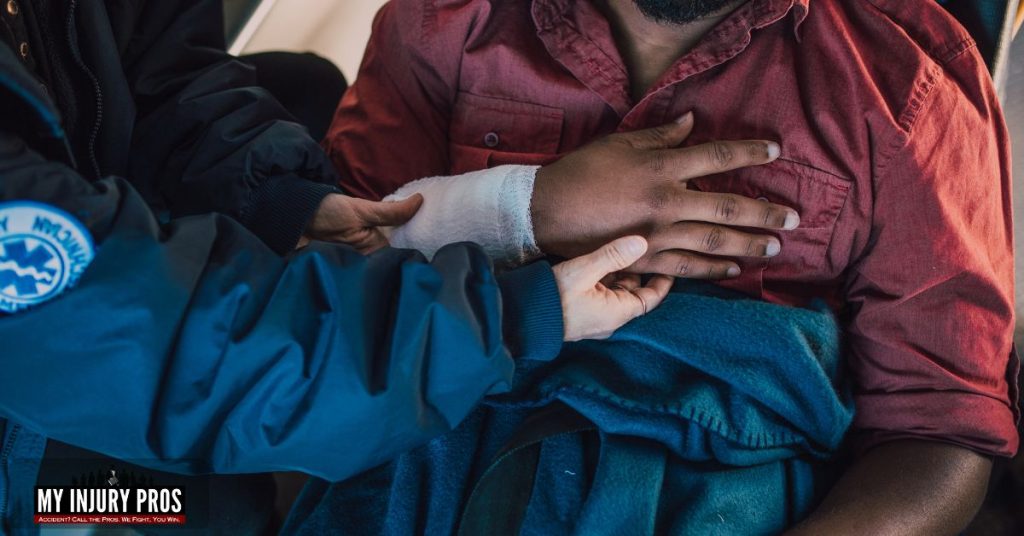
Undocumented immigrants in the U.S. have legal rights, especially in personal injury cases, as the law does not distinguish between citizens and non-citizens when holding wrongdoers accountable. The U.S. Constitution guarantees equal protection under the law for all individuals, regardless of immigration status, through the 14th Amendment. This protection ensures that no state can deny any person, including undocumented immigrants, equal legal treatment.
U.S. civil courts are open to all individuals, regardless of citizenship or the plaintiff's immigration status. This means anyone can file lawsuits for personal injury compensation. Discriminating against undocumented immigrants in access to the courts would violate constitutional protections and undermine the justice system's role in ensuring accountability and public safety.
Section 1 of the 14th Amendment protects "any person" from a state's denial of due process or equal protection; it does not limit those protections to citizens. The Supreme Court's 1982 Plyler v. Doe decision is often cited for this point. It is an education case, not an injury case: the Court struck down a Texas law that let school districts deny enrollment to undocumented children, and held that an undocumented immigrant is a "person" protected by the Equal Protection Clause, whatever his or her status under the immigration laws.
Courts have consistently ruled in favor of allowing undocumented immigrants to pursue personal injury claims, reinforcing their right to justice. Denying this right would be both unjust and unconstitutional, undermining the protections guaranteed by the Constitution.
Can Undocumented Immigrants File a Personal Injury Lawsuit?
Yes, undocumented immigrants can file a personal injury lawsuit in the United States. U.S. Courts have repeatedly upheld that immigration status does not prevent someone from pursuing justice through the legal system. Many of them have successfully won personal injury cases, including workers injured on the job or victims of car accidents, often receiving fair settlements with the help of skilled attorneys. These cases show that the law protects people, not just citizens, when it comes to personal injury rights.
New York's Balbuena decision on lost wages
Being allowed to sue is one question. Recovering the wages an injury took away is another, and New York's highest court answered it in Balbuena v. IDR Realty LLC, 6 N.Y.3d 338 (2006).
The ruling decided two appeals together. Gorgonio Balbuena and Stanislaw Majlinger were construction workers without authorization to work in the United States. Majlinger said he was installing siding from a scaffold about 15 feet up when it collapsed. Both men sued under Labor Law §§ 200, 240(1) and 241(6), the statutes that put safety duties for scaffolds, hoists and construction sites on owners and contractors. The defendants argued that federal immigration law ruled out any award of lost earnings.
By a 4-2 vote, the Court of Appeals disagreed. It held that "on the records before us in these Labor Law §§ 200, 240 (1) and § 241 (6) cases, and in the absence of proof that plaintiffs tendered false work authorization documents to obtain employment," the Immigration Reform and Control Act (IRCA) "does not bar maintenance of a claim for lost wages by an undocumented alien." The court also wrote that the Labor Law "applies to all workers in qualifying employment situations" and that this holds "regardless of immigration status."
Three limits matter when you read the case:
- It decided Labor Law workplace cases. Other injury claims are argued from it, but the holding itself is about those statutes.
- It turned on the absence of proof that the workers handed over false work papers. Using false documents is the fact that decided the federal case discussed below.
- Immigration status can still affect the amount. The court said a jury may consider it "as one factor" when deciding future lost wages, and that a worker could show he had obtained, or was seeking, work authorization.
Why Hoffman Plastic does not control New York injury claims
Defense lawyers often cite Hoffman Plastic Compounds, Inc. v. NLRB, 535 U.S. 137 (2002). In that case, a worker named Jose Castro got his job by presenting a friend's birth certificate. He was laid off for supporting a union drive, and the National Labor Relations Board ordered back pay. The Supreme Court held that federal immigration policy "foreclosed the Board from awarding backpay to an undocumented alien who has never been legally authorized to work in the United States."
The Balbuena court explained why that result does not carry over:
| Hoffman Plastic (2002) | Balbuena (2006) | |
|---|---|---|
| Forum and claim | Federal labor board, back pay for work not performed after an unlawful layoff | New York state court, damages for injuries caused by Labor Law violations |
| False documents | Yes. Castro used another person's birth certificate | No allegation the workers presented false papers, or were even asked for them |
| Physical injury | None | Serious injuries alleged to limit the ability to work |
| Result | Back pay barred | Lost-wage claim allowed to proceed |
The court added a preemption point. IRCA expressly overrides only state laws that impose "civil or criminal sanctions" on employers of unauthorized workers (8 U.S.C. § 1324a(h)(2)). Damages in an injury case compensate the worker; they are not a sanction. Two judges dissented and would have applied Hoffman, so expect the defense to argue it. In New York's trial courts, though, Balbuena is the controlling decision.
Do Immigration Authorities Get Involved If You Sue?
A common fear among undocumented immigrants is that filing a lawsuit might alert immigration services. But, filing a personal injury claim does not automatically trigger immigration enforcement. Personal injury cases are civil matters, not criminal or immigration-related. They are typically handled in state courts that have no obligation to report a person’s immigration status to federal authorities.
Personal injury attorneys are bound by strict confidentiality rules that ensure your immigration status remains private unless you consent to disclosure. Experienced personal injury lawyers are skilled at protecting your privacy throughout the legal process. Suing while undocumented does not directly lead to deportation, as deportation is only triggered through immigration enforcement, not civil courts. There is no direct link between filing a lawsuit and the risk of deportation, and many undocumented individuals successfully seek compensation without facing immigration issues.
New York's courthouse protection from civil arrest
New York put one protection into statute. Under Civil Rights Law § 28 (civil arrest; certain locations), a person attending a court proceeding in good faith as a party or potential witness is "privileged from civil arrest while going to, remaining at, and returning from" that proceeding, unless the arrest is backed by a judicial warrant or judicial order. The same protection covers a person whose family or household member is the party or witness.
"Civil arrest" means an arrest not made to bring a criminal prosecution or for contempt of that court, and the warrant or order must come from a judge or magistrate in the judicial branch. Willfully making or assisting a barred arrest is contempt and false imprisonment under the statute.
Can your immigration status come up in the case?
It can, and it is better to know that going in. In Balbuena, a defendant asked during discovery for proof that the worker was authorized to work, then asked the court to dismiss the lost-wage claim when he could not produce it. The Court of Appeals let the claim go forward, but said a jury may weigh immigration status as one factor in future lost wages. The decision addressed lost wages only. New York discovery covers matter "material and necessary" to the claims and defenses (CPLR 3101(a)), and under CPLR 3103(a) a court can issue a protective order limiting discovery to prevent "unreasonable annoyance, expense, embarrassment, disadvantage, or other prejudice."
Types of Personal Injury Cases Illegal Immigrants Can File
Undocumented immigrants in the U.S. have the legal right to file personal injury claims across a range of situations, including car accidents, slips and falls, workplace injuries, wrongful death, medical malpractice, and even assault. For car accidents, undocumented individuals can seek compensation even if they don’t have a valid driver’s license or insurance, though those factors might complicate the claim. They’re still entitled to damages if the other driver was at fault. In workplace injury cases, undocumented workers can file for workers' compensation benefits regardless of status. Still, some employers may try to avoid liability by using immigration status as a threat, which is illegal.
In New York, a threat to call immigration is unlawful retaliation
New York's anti-retaliation statute names this tactic. Labor Law § 215(1)(a) bars an employer from threatening or penalizing an employee for complaining about a Labor Law violation or exercising rights under that chapter. Prohibited retaliation expressly includes "threatening to contact or contacting United States immigration authorities," or reporting or threatening to report the suspected immigration status of the employee or a family or household member. The Labor Commissioner can assess civil penalties of $1,000 to $10,000 for a violation, and up to $20,000 for a repeat violation within six years.
In slip and fall cases, undocumented individuals can hold property owners accountable for unsafe conditions under premises liability law, though proving negligence is essential. Medical malpractice is another area where undocumented immigrants can sue if a healthcare provider’s negligence caused harm, though access to medical records may present challenges.
Also, assault and intentional torts, such as battery or abuse by employers or landlords, are grounds for a lawsuit. Immigration status does not remove the right to legal protection from harm. Undocumented victims of violence or intimidation may have additional protections under certain federal laws.
One of those protections is the U visa. According to U.S. Citizenship and Immigration Services, U nonimmigrant status is set aside for victims of certain crimes who suffered mental or physical abuse and are helpful to law enforcement or government officials in investigating or prosecuting the crime. Congress created it in October 2000. Whether a particular assault qualifies is an immigration-law question, so a victim weighing an injury claim should also speak with an immigration attorney.
New York workers' comp without work authorization
A comp claim raises a different question from a lawsuit: can a worker without papers collect benefits at all? New York's highest court took it up in Matter of Ramroop v Flexo-Craft Printing, Inc., 11 N.Y.3d 160 (2008). Ronnie Ramroop was a printer who crushed four fingers of his right hand in a printing press in March 1995. He received temporary disability benefits and then a 75% schedule loss of use award, paid until January 2000. The court noted that primary workers' compensation benefits have been held available to injured workers who cannot show legal immigration status.
What he could not get was "additional compensation" under Workers' Compensation Law § 15(3)(v). That benefit covers lost earning capacity after a loss of use of 50% or more of an arm, leg, hand or foot. It requires the worker to take part in a board-approved rehabilitation program. The state vocational agency had found Ramroop ineligible because he could not be legally employed, and the court held 5-2 that he did not meet that requirement. The two dissenting judges would have sent the case back to find out whether any approved program would take him.
| Benefit | How status affected it in Ramroop | Where it comes from |
|---|---|---|
| Temporary disability and schedule loss of use awards | Paid in full from March 1995 to January 2000 | The Board awards described in the opinion |
| Additional compensation for impaired earning capacity | Denied, because the worker could not join a board-approved rehabilitation program | WCL § 15(3)(v), as read by the court |
| Compensation for a worker who moves outside the United States or Canada | Same amount as for residents since a 1985 amendment; before that the Board could cut it in half | WCL § 17, as explained in the opinion |
There is also an enforcement angle. In a January 8, 2024 announcement, the Workers' Compensation Board said it would send letters to the Department of Homeland Security supporting requests for deferred action and work authorization for undocumented workers affected by its investigations of employers. Whether a request is granted is a federal decision.
How to File a Personal Injury Lawsuit as an Illegal Immigrant

The law protects the rights of undocumented immigrants to file personal injury lawsuits in the United States. Knowing the proper steps to take can help you build a stronger case and protect your rights throughout the legal process.
1. Seek Medical Attention Immediately
Your health and safety should be your top priority. If you’re injured, visit a doctor or hospital as soon as possible, regardless of your immigration status. Be sure to keep detailed records of all your medical visits, prescriptions, and treatments. Request copies of your medical bills and reports, as they will serve as essential evidence when filing your personal injury claim.
2. Gather Evidence to Support Your Case
To support your case, collect as much evidence as possible. This includes taking photos and videos of the accident scene, your injuries, and any property damage. If there were any witnesses, get their contact information and statements. Keep any relevant documents such as accident reports, employer records, or correspondence related to your injury.
3. Report the Incident to the Proper Authorities
It’s crucial to report the incident to the right authorities. For car accidents, contact the police and file a report promptly. If you were injured at work, notify your employer immediately and make sure the incident is documented. In cases like slip-and-fall accidents, report the injury to the property owner or manager and ask for written confirmation of your report.
4. Avoid Speaking to Insurance Companies Without Legal Advice

Insurance adjusters may try to use your immigration status to reduce or deny your claim. It’s important not to admit fault or agree to any settlements without first consulting a qualified personal injury attorney. Keep a record of all communication with insurance companies, and do not sign anything until you’ve received legal guidance.
5. Hire An Experienced Personal Injury Attorney
Seek out a personal injury attorney who has experience working with undocumented clients. Many of these attorneys work on a contingency fee basis, meaning you only pay if they win your case. Choose a lawyer who will prioritize your rights and privacy, and who understands the unique challenges that may come with your immigration status.
Get the compensation you deserve with established professionals at My Injury Pros. Our experienced team is here to stand by your side at every step of the way. Contact us for a free consultation today!
6. File Your Personal Injury Claim Within the Legal Deadline
Every state has a statute of limitations that sets a time limit for filing a personal injury claim. Missing this deadline can result in losing your right to compensation. A knowledgeable attorney will make sure your case is filed on time and adheres to all necessary legal procedures to help you avoid unnecessary setbacks.
In New York, the general rule is three years. CPLR 214(5) requires "an action to recover damages for a personal injury" to be started within three years, with exceptions listed in the statute itself (sections 214-b, 214-c, 214-i and 215). The deadline is the same whatever your immigration status. If you want to see how a case moves after filing, our guide on how a personal injury lawsuit works walks through the stages.
7. Prepare for Settlement Negotiations or a Court Trial
Many personal injury claims are resolved through settlement negotiations, where both sides agree on a fair amount of compensation. On the other hand, if a fair settlement isn’t reached, your case may go to trial. Your attorney will be responsible for presenting the evidence, making your case in court, and fighting for the compensation the law allows.
What Damages Can Illegal Immigrants Claim in a Lawsuit?
Undocumented immigrants injured due to someone else’s negligence have the legal right to seek compensation for various damages, just like any other personal injury victim. This includes medical expenses such as hospital bills, doctor visits, medications, physical therapy, and future treatments related to the injury. They can also recover lost wages, even if they were paid in cash or “under the table,” as courts acknowledge their economic contributions and right to fair compensation.
In New York, the lost-wage rule comes from Balbuena, described above: no automatic bar, with immigration status available to the jury as one factor for future earnings.
In addition to economic losses, undocumented individuals may be entitled to compensation for pain and suffering, which covers physical pain and emotional distress caused by the injury. In more serious cases involving intentional harm or reckless disregard for safety, punitive damages may also be awarded to punish the wrongdoer and deter future misconduct. Though less common, these damages highlight the seriousness of the responsible party’s actions.
Most personal injury cases are resolved through settlements before going to trial. Settlements offer a quicker resolution and eliminate the uncertainty of a court decision. The settlement amount varies widely depending on the case. For undocumented immigrants, working with an experienced attorney is essential to navigate the legal system, protect their rights, and pursue the compensation the law allows.
Challenges Undocumented Immigrants Might Face
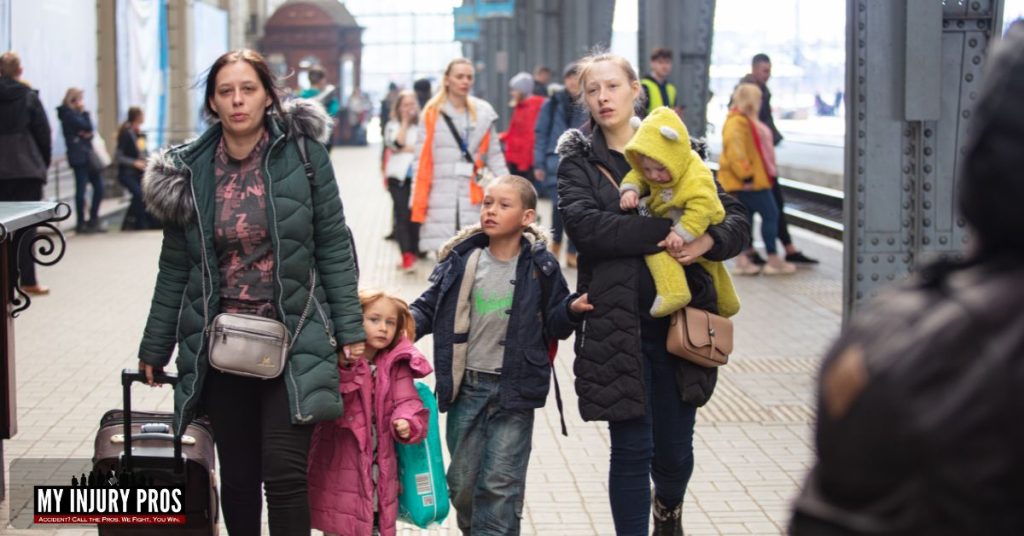
Undocumented immigrants often face significant challenges when pursuing personal injury claims, with fear of deportation or ICE involvement being one of the most common barriers. Although there’s little justification for this fear in civil cases, it still prevents many from taking legal action, even when they have valid claims. Language barriers also pose difficulties, making it harder to communicate with attorneys, understand legal documents, or navigate the court system without proper interpretation or bilingual support.
Another substantial obstacle is a general lack of awareness about legal rights. Many undocumented individuals don’t realize they can seek fair compensation for injuries regardless of immigration status. Additionally, some employers or insurance companies may try to exploit or intimidate undocumented workers, using their status to pressure them into dropping claims or accepting low settlements. Having legal representation is crucial to protecting these individuals' rights and ensuring they are protected from unfair treatment throughout the legal process
A court interpreter at no cost in New York
Language is one barrier New York's court rules address directly. Under 22 NYCRR 217.1(a), in all civil and criminal cases, when the court finds that a party or witness cannot understand and communicate in English well enough to meaningfully take part, the clerk schedules an interpreter at no expense. The interpreter comes from a list kept by the Office of Court Administration, and the court may allow interpreting by phone or video. If nobody on the list is available, the clerk still has to find one at no expense, as justice requires.
- At the clerk's counter: section 217.2 requires interpreting at no expense for a person with limited English who asks the clerk's office for help.
- Bringing your own: a party may waive the court interpreter, with the court's consent, by bringing one at their own expense. A person testifying as a witness cannot waive it.
The rule speaks of court proceedings and the clerk's office. Depositions take place outside the courtroom, during discovery, so it pays to settle early how interpreting will be handled there. Our guide on how long discovery takes in a personal injury case explains that stage.
Need a Lawyer to Protect Your Rights in an Injury Case?
Every person, regardless of immigration status, has the right to legal protection and fair compensation when harmed due to someone else’s actions or negligence. Undocumented immigrants are protected under U.S. civil law and can seek justice through personal injury claims without fear of automatic deportation or legal retaliation. Whether it’s a car accident, workplace injury, slip and fall, or assault, your rights matter.
If you or someone you know has been injured, don’t suffer in silence. Fear should never stand in the way of your health, safety, or recovery. Speak to a trusted personal injury attorney who understands your situation and can guide you confidentially through your legal options.
Worried your immigration status might stop you from seeking justice after an injury? At My Injury Pros, we believe everyone deserves fair treatment under the law. Our legal team takes on personal injury claims, including complicated ones. We treat every case with care, discretion, and a deep commitment to getting you the compensation you deserve. Don’t wait to take the first step toward justice. Schedule a free case evaluation with us today!
Frequently asked questions
Can an undocumented immigrant sue after a car accident in New York?
Yes. Immigration status does not close New York courts to an injured person. The usual rules still apply: you must prove the other driver was at fault and file on time. For more on the claim itself, see our page on car accident claims.
Can I recover lost wages if I worked without authorization?
Yes, in New York Labor Law cases, under Balbuena v. IDR Realty LLC, 6 N.Y.3d 338 (2006), absent proof of false work papers. A jury may weigh immigration status as one factor in future lost wages.
Does Hoffman Plastic mean I cannot get lost wages?
No, not in a New York Labor Law injury case. Hoffman barred labor-board back pay for an uninjured worker who used false papers; Balbuena held it does not bar lost-wage claims where no false documents were shown.
Will the defense ask about my immigration status?
It may, mainly if you claim lost wages. In Balbuena the defense asked for proof of work authorization in discovery. Courts can limit discovery with a protective order under CPLR 3103(a).
Can I be arrested by immigration agents at a New York courthouse?
Not for a civil arrest without a judicial warrant or order. Under Civil Rights Law § 28, a party or potential witness attending a New York court proceeding in good faith is "privileged from civil arrest while going to, remaining at, and returning from" it.
Can my employer threaten to report me if I complain about an injury?
No. New York Labor Law § 215 lists "threatening to contact or contacting United States immigration authorities" as prohibited retaliation against an employee who complains about a Labor Law violation or exercises rights under that law. If you were hurt at work, our guide on what to do after a fall at work covers the first steps.
How long do I have to file an injury lawsuit in New York?
Three years in most cases. CPLR 214(5) sets three years for "an action to recover damages for a personal injury," with exceptions named in the statute. Immigration status does not pause or extend that deadline.
Was Plyler v. Doe a personal injury case?
No. Plyler v. Doe, 457 U.S. 202 (1982), is an education case. It is cited here for one principle: an undocumented immigrant is a "person" under the Equal Protection Clause.
Is there an immigration benefit for victims of a violent crime?
Possibly. USCIS describes the U visa as status for victims of certain crimes who suffered mental or physical abuse and help law enforcement. It is separate from an injury lawsuit.