
In California, you typically have two years from the date of your injury to file a personal injury claim, so it’s important not to wait too long to take action. There are some exceptions, like if your injury wasn’t discovered right away, if a minor is involved, or if your claim is against a government entity, which often comes with a much shorter deadline. If you miss the filing window, you could lose your chance to recover compensation, no matter how strong your case is.
Wondering how long you have to file a personal injury claim in California? At My Injury Pros, our experienced team of personal injury attorneys helps you navigate the statute of limitations so you don’t miss critical deadlines. We provide clear guidance on exceptions and ensure your rights are protected every step of the way. Contact us today to get expert advice and take the first step toward securing the compensation you deserve.
In this blog, we will break down the statute of limitations for personal injury cases in California, including key deadlines, important exceptions, and what happens if you miss your chance to file.
What Is The Statute Of Limitations Of Personal Injury In California?

According to traffic collision data, every year in California, tens of thousands of people are injured in car accidents, and over 300,000 workers experience nonfatal workplace injuries. These numbers show just how common personal injuries are, making it essential to understand your rights and deadlines for filing a claim.
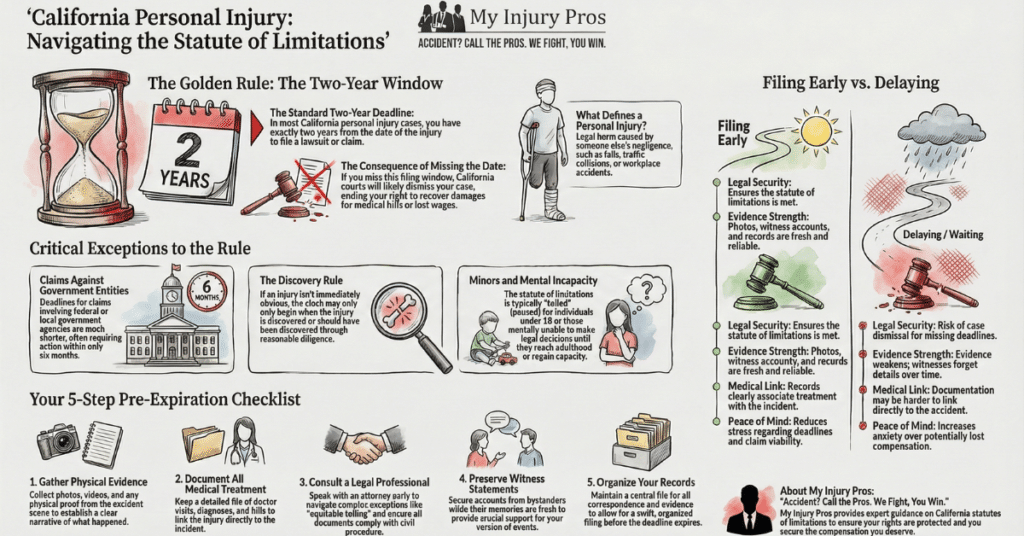
The statute of limitations is simply the deadline you have to file a personal injury claim in California or file a lawsuit under California law. In most cases, you have two years from the date of your injury, known as the two-year statute, to take action. If you miss this deadline, you could lose your legal right to seek compensation or bring a legal claim. That’s why it’s important to understand your timeline and act early before the limitations deadline.
California state law sets clear time limits for personal injury cases under California law and the California personal injury statute. A personal injury means harm caused by someone else’s negligence, like a car accident or a fall, and may involve an accident victim or the injured party.
The clock usually starts on the day you’re injured; however, in some cases, it may start later if the injury isn’t discovered right away with reasonable diligence. Claims involving a federal government agency often have shorter deadlines. Occasionally, the deadlines for government claims can be as little as six months.
Understanding these deadlines is important because filing too late can stop your case before it even begins or prevent you from filing a lawsuit. Courts take these time limits seriously, and missing them can mean losing your chance to recover damages or bring a legal claim.
Acting early also helps you gather evidence, including reliable evidence, while it’s still fresh and before witness memories fade. Filing on time gives you the best chance of moving forward with your claim and seeking damages.
How Does The Statute Of Limitations Affect Personal Injury Claims?
The statute of limitations is the deadline you have to file a personal injury claim in California or file a lawsuit under California law. In most cases, you have two years from the injury date, known as the two-year statute, to take action. Filing within this timeframe allows California courts to hear your case. However, if you miss the deadline, the court may dismiss your case, potentially affecting your legal rights.
Missing the deadline can have serious consequences for your claim. You could lose your legal right to sue or file a lawsuit, even if you have strong evidence. Courts typically reject cases filed beyond the deadline and may decline to consider the lawsuit. This means you may no longer be able to recover compensation or seek compensation for your injuries.
Some exceptions can change how the deadline works under California law and the California statute. For example, the time limit may be paused in certain circumstances if the injured party is a minor. In other cases, the clock may start when the injury is discovered instead of when it happened or when the injury occurs, based on reasonable diligence. These exceptions can provide additional time, but they vary based on specific circumstances.
What Are The Exceptions To The Statute Of Limitations?

Exceptions to the statute of limitations are situations where the usual deadline is adjusted or paused under California law and the California statute. While most personal injury claims must be filed within two years, the time frame can change depending on certain circumstances.
Exceptions exist to make things fair when someone cannot act right away or take civil actions. For example, equitable tolling may pause the deadline if you are pursuing another legal option in good faith and taking legal action.
Some common exceptions apply to minors and individuals with mental incapacity under California law. If you are under 18, the time limit is usually paused until you become an adult, allowing the injured party time to file a lawsuit later. The same applies if someone is mentally unable to make legal decisions, depending on specific circumstances. These rules help protect people who cannot take action immediately after an injury or the underlying accident.
Another key exception is the discovery rule, which applies when an injury is not obvious right away. In these cases, the time limit starts when the injury is discovered or should have been discovered with reasonable diligence. This provides you a chance to take action, including a personal injury action, even if symptoms appear later. Overall, these exceptions show that the law considers real-life situations when applying deadlines and how limitations exist.
How Can An Attorney Help With Personal Injury Statutes?
An attorney helps you understand personal injury laws and filing deadlines in California. The statute of limitations can be confusing, especially since different rules apply to cases like medical malpractice or wrongful death, including wrongful death claims.
A personal injury attorney in California will clarify your time limits and guide you through the process step by step, assisting you in building a legal claim. Working with a personal injury lawyer early helps you stay organized and avoid missing important deadlines. Get support from a knowledgeable attorney.
Attorneys also assist you in filing and managing your case in accordance with civil procedure. They prepare and submit documents promptly, ensuring compliance with legal requirements for your personal injury lawsuit. Before witness memories fade, they gather and preserve important evidence, including reliable evidence, to prevent its loss or deterioration over time. In addition, they handle communication with insurance companies and protect your rights.
A lawyer also provides clear legal advice and consultations, sometimes even a free consultation. They can explain exceptions like tolling or the discovery rule and how they apply to your situation. They make sure you file your claim before the deadline expires. Having an attorney improves your chances of staying on track and successfully moving forward with your case.
Damages You Can Recover in California Personal Injury Cases
Traffic collisions and workplace accidents rank among the leading causes of serious injuries in California. In 2024, government data shows that private industry employers reported over 344,000 nonfatal injuries, while fatal work injuries totaled 439. Figures from this data highlight the real impact these accidents can have on the lives of victims.
If you sustain injuries due to another party’s negligence, California law permits you to seek compensation for your losses. Economic damages cover actual costs like medical bills, lost wages, rehabilitation, and property damage, and they are easy to calculate.
Non‑economic damages compensate for pain and suffering, emotional distress, or loss of enjoyment of life. They’re less tangible but just as important. Knowing the types of damages you can recover helps you understand your claim and estimate how much you might receive. Acting early and keeping good records strengthen your case.
What Steps Should Be Taken Before The Statute Of Limitations Expires?
Taking appropriate steps before the statute of limitations expires is crucial for preserving your personal injury claim. We regularly remind our clients, "Photos, medical records, and witness statements are the backbone of any personal injury claim." Acting promptly ensures you have strong evidence, proper documentation, and professional guidance to support your case. Here’s a simple checklist to keep you on track:
Step 1. Gather Evidence
Collect photos, videos, and any physical proof related to your injury or accident. This evidence helps establish what happened and strengthens your claim.
Step 2. Document Medical Treatment
Keep detailed records of all doctor visits, diagnoses, and treatments. Accurate medical documentation shows the extent of your injuries and links them to the incident.
Step 3. Consult a Legal Professional
Speak with an experienced personal injury attorney as soon as possible. Legal guidance ensures you understand deadlines, exceptions, and how to prepare your claim effectively.
Step 4. Preserve Witness Statements
Reach out to anyone who saw the accident and note their accounts. Witness testimony can provide crucial support and back up your version of events.
Step 5. Organize Your Records
Keep all evidence, bills, and correspondence in one place. Having an organized file makes it easier for your attorney to build a strong case before the deadline.
Filing a Personal Injury Claim Early vs. Delaying
When it comes to filing a personal injury claim in California, timing can make all the difference. Acting quickly can help preserve evidence, secure medical documentation, and ensure you don’t miss the statute of limitations. On the other hand, there are situations where waiting, under certain exceptions, might give you more time to act. Understanding the trade-offs between filing early and delaying can help you make informed decisions about your claim.
| Factor | Filing Early | Delaying / Waiting |
|---|---|---|
| Legal Security | Filing promptly ensures you meet the statute of limitations and avoid losing your right to sue. | Waiting risks missing the deadline, which can result in the court dismissing your case entirely. |
| Evidence Strength | Evidence is fresh: photos, witness accounts, and medical records are more reliable. | Delayed claims may weaken evidence, witnesses may forget details and records may be harder to obtain. |
| Medical Documentation | Medical records are up-to-date and clearly linked to the injury, supporting your claim. | Later documentation may be less clear or harder to associate directly with the incident. |
| Exceptions/Flexibility | Early filing generally avoids the need to rely on exceptions like the discovery rule or tolling. | In some cases, exceptions (minor mental incapacity, delayed injury discovery) may extend your timeline, giving you more time to file. |
| Legal Guidance | Engaging an attorney early allows for strategic planning and timely filing. | Waiting may limit options or make the case harder to manage, even with an attorney. |
| Peace of Mind | Taking action early reduces stress and uncertainty about deadlines and claim viability. | Delaying can cause anxiety about missing deadlines or losing compensation. |
Ready to Navigate the Personal Injury Statute of Limitations in California?
Understanding the statute of limitations for personal injury in California is crucial to safeguarding your rights. By acting within the two-year timeframe, you can ensure your claim is heard and potentially secure the compensation you deserve. If you're facing the complexities of a personal injury case, don't hesitate to seek expert legal guidance.
Not sure how much time you have to file a personal injury claim in California? At My Injury Pros, we make understanding the statute of limitations simple and stress-free. Our team can guide you through exceptions and deadlines so you don’t risk losing your right to compensation. Reach out today and let us help you protect your claim with confidence.
Frequently Asked Questions
Here are some frequently asked questions to help you better understand personal injury claims and legal deadlines. These simple answers cover key concerns you may have.
What Is the Statute of Limitations for Personal Injury in California?
The statute of limitations is the deadline you have to file a personal injury claim in California. In most cases, you have two years from the date of your injury to take legal action.
How Long Do I Have to File a Personal Injury Claim in California?
Most people have two years to file a personal injury claim in court. The clock usually starts on the day the injury happens, but it may begin later if the injury is discovered afterward.
Can the Statute of Limitations for Personal Injury Cases in California Be Extended?
Yes, the deadline can be extended in certain situations. This may happen through exceptions like tolling or the discovery rule, depending on your case.
What Happens if I Miss the Statute of Limitations for a Personal Injury Claim in California?
If you miss the deadline, you usually lose your right to file a lawsuit. The court will likely dismiss your case, which means you cannot recover compensation.
Are There Different Statutes of Limitations for Different Types of Personal Injury Cases in California?
Yes, different types of cases can have different deadlines. For example, claims against government entities may require action within six months.
Disclaimer: The information provided on this blog is for general informational purposes only and does not constitute legal advice. Reading this content does not create an attorney-client relationship. Laws and regulations vary by jurisdiction and may change over time, so you should consult a qualified personal injury attorney directly for advice regarding your specific situation. Past examples, case studies, or hypothetical scenarios are illustrative only and do not guarantee similar results.