
Short Answer
There is no single average that works for everyone, since the value of a personal injury case is built from the facts rather than something you can look up in a book. It begins with quantifiable financial losses, including medical bills, future care costs, lost pay, and diminished earning ability. Suffering and pain accrue and rely upon medical records and testimony because there are no receipts to document them. The at-fault party's insurance policy limits then cap what is realistically available, and most claims end in a negotiated settlement instead of a verdict.
A personal injury case is worth your documented losses plus a fair value for what the injury has done to your life. That usually means medical bills, lost income, and pain and suffering, adjusted for how clearly the other party was at fault. Simple claims may settle quickly for modest amounts, while serious injuries with long recoveries can be worth far more.
At My Injury Pros, founder Steven P. Nassi has spent nearly twenty-five years helping people who have been hurt, and we serve clients from offices in Los Angeles and Dallas. Our personal injury lawyers review medical records, document lost income, and negotiate with adjusters to fully reflect the impact of the injury sustained. Contact us today for a free consultation and a clear idea of how much your case may be worth.
This article explains what shapes the value of a personal injury case, how insurers and evidence affect it, and what steps follow.
What Is A Personal Injury Case
A personal injury case is a legal claim that starts when someone is hurt because another person failed to use reasonable care. Under the law, if someone is hurt, they have a way to hold the at-fault party accountable and to get compensation for medical bills, lost wages, and other losses.
Injuries vary widely here; they range from soft tissue damage to traumatic brain injuries and spinal cord injuries, as well as causing fatalities that are wrongful deaths. Those people come out of car crashes, workplace accidents, slip-and-fall incidents, and medical errors.
The legal foundation is negligence, which means someone failed to act with reasonable care and that failure caused harm. The person who is responsible might be anyone: a driver, property owner, boss, or business. If fault is proven, someone who has been harmed can seek compensation through a personal injury lawsuit. A negotiated settlement can address both financial loss and the personal cost of the injury.
How Do You Calculate The Worth Of A Case?
Considering a case involves scrutinizing carefully both the money that was lost and how that injury has changed your life. Attorneys and insurers follow a similar process to estimate a fair settlement, and it always starts with documentation.

To figure out how much a case is worth, start with looking at the medical side. Total up medical bills, doctor visits, physical therapy, medications, and any treatments you think you will need in the future. Now tally up the income that you have lost. If you miss work because of an injury and that injury reduces how much you earn in the future, those earnings both go down.
Damage to property follows that. If something was damaged in the incident, such as a vehicle in a car accident, the repair or replacement cost is included. Estimating pain and suffering happens later. These non-economic damages cover physical pain, emotional distress, and the way the injury changes your daily activities and quality of life.
Then comes liability and evidence. Accident reports, medical records, and witness statements show how much responsibility each party holds, and that affects the number. If you share some of the blame, the rule of comparative negligence can reduce your compensation by your percentage of fault, and the exact rules vary by state. Last, consider the long-term impact. Permanent injuries, long recoveries, and lasting disabilities often raise the overall value of a case.
What Factors Influence The Value Of A Personal Injury Settlement?
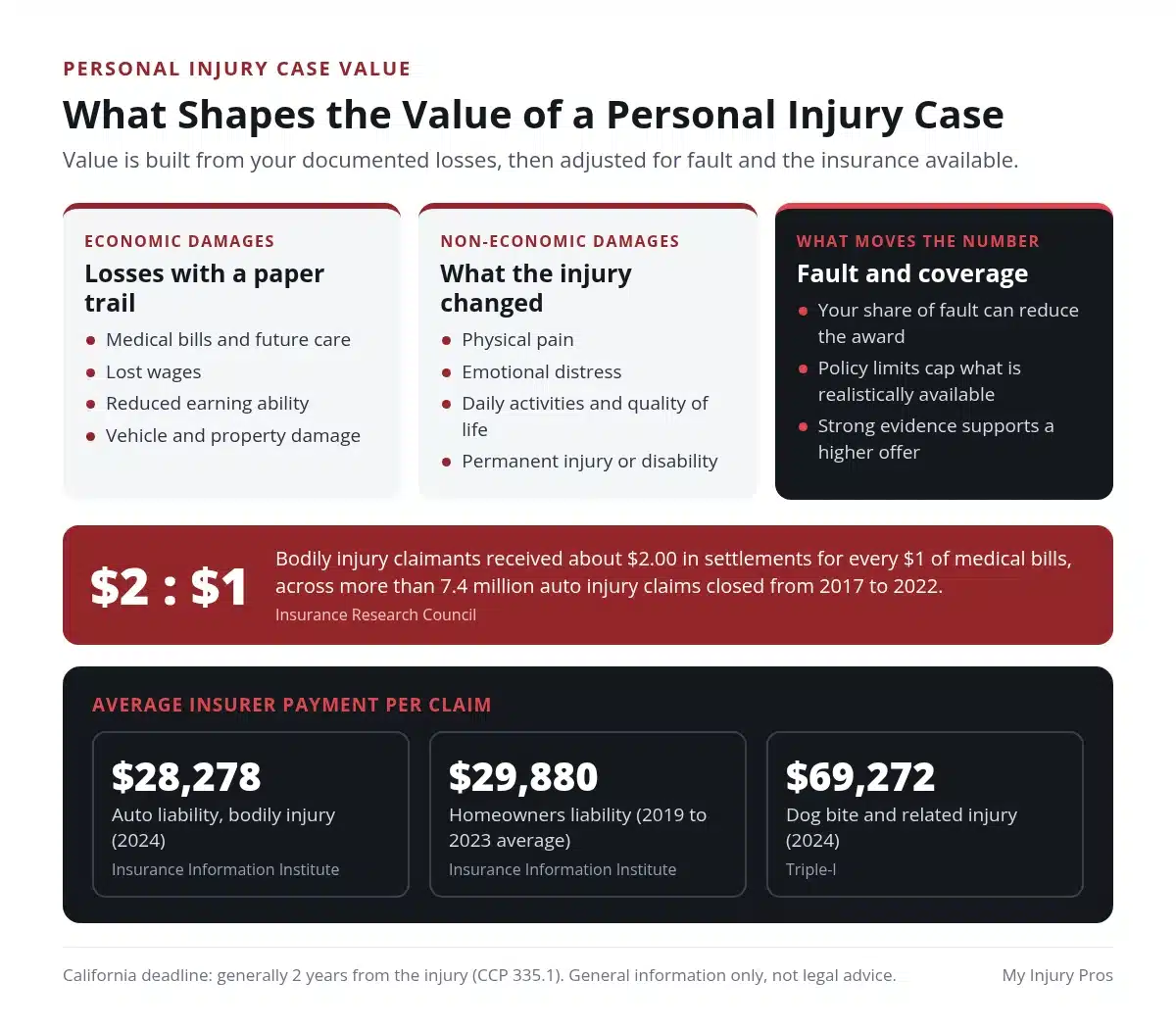
Courts and insurers weigh compensatory damages, punitive damages in some circumstances, and the available insurance coverage when they estimate a settlement. The National Safety Council estimates that unintentional injuries cost the United States $1,329.4 billion in its latest annual figures. Insurers paid an average of $28,278 on auto liability bodily injury claims in 2024, based on Insurance Information Institute data. Dog bite claims cost more, averaging $69,272 per claim that year in a Triple-I analysis. Numbers like these help explain why California verdicts and settlements range from modest amounts to millions of dollars.
Medical bills are usually the foundation of a personal injury claim. Hospital visits, medical treatment, physical therapy, and ongoing care all count as economic damages, and they directly affect the settlement amount.
Lost income matters just as much when an injury keeps you from working. You may be able to recover wages you have already missed, along with future earnings if recovery takes longer or the disability is permanent. In some cases, a free case evaluation with an attorney can help estimate what the claim is worth.
Pain and suffering covers the physical pain and emotional distress the injury caused. These are non-economic damages, so no bills or receipts sit behind them, but they often shape the final settlement value.

Key Factors That Affect Your Personal Injury Case Value
Figuring out what a lawsuit is worth feels confusing when medical bills, lost wages, and daily life effects all play a part. The table sorts the main elements by how much they move the number and what can limit them.
| Factor | Description | Impact on Case Value | Notes |
|---|---|---|---|
| Medical Expenses | Cost of hospital visits, treatment, therapy, and future care | High, because it directly drives economic damages. | Accurate documentation raises the potential settlement. |
| Lost Income | Wages lost to time off work and reduced earning capacity | High, because it adds to economic damages | Future earnings are harder to quantify, so estimates vary. |
| Pain And Suffering | Physical pain, emotional distress, and lifestyle impact | Medium, because it is non-economic | Subjective, so it needs strong support from records or testimony. |
| Liability And Evidence Strength | Proof of fault, witness statements, and accident reports | High, because it can make or break the case. | Weak evidence can lower offers or lead to denial. |
| Property Damage | Damage to a car, personal items, or other property | Medium, because it is economic | Usually easy to quantify and may be covered separately |
| Long-Term Impact | Permanent injuries, disabilities, or lasting lifestyle changes | High, because it increases non-economic damages. | Long recoveries generally raise settlement value. |
| Insurance Coverage | Policy limits of the at-fault party's insurance | High, because it caps the maximum | Even a strong case can be limited by available coverage. |
| Negotiation And Legal Representation | Ability to negotiate and advocate effectively | Medium to high, because it can improve the result. | An experienced attorney can help pursue higher compensation. |
Average Claim Payments by Accident Type and Severity
Averages give a rough sense of scale, even though no two claims match. The table shows what insurers paid on average per claim for three common accident types, using figures from the Insurance Information Institute.
| Accident Type | Average Paid Per Claim | Period |
|---|---|---|
| Auto liability, bodily injury | $28,278 | 2024 |
| Homeowners liability | $29,880 | 2019 to 2023 average |
| Dog bite and related injury | $69,272 | 2024 |
These figures are insurer payments across all claims, including minor ones, so a serious injury can settle for far more. Averages and past results do not guarantee a similar outcome.
Severity matters even more than the type of accident. The Insurance Research Council studied more than 7.4 million auto injury claims closed between 2017 and 2022. Bodily injury claimants received about $2.00 in settlements for every $1 of medical bills. That ratio rose from $1.80 to more than $2.30 over the period. Because settlements track medical expenses this way, injuries that need more treatment usually produce larger settlements.
What Are The Steps In A Personal Injury Claim?
Filing a claim can feel daunting, but the steps are quite orderly. Knowing the different stages helps you protect your rights from the first day.
Report the Injury
Notify both the responsible party and your insurance company as soon as possible. Timely and precise reporting establishes a clear account of events, emphasizing the importance of time. California's statute of limitations gives injured people two years from the date of the injury to file under section 335.1 of the Code of Civil Procedure. Waiting too long can result in losing a claim regardless of how strong your evidence is.
Consult With A Lawyer
A personal injury attorney explains your rights, gathers evidence, and guides you through the process. Getting an attorney involved early helps safeguard your claim right from the beginning.
Submit Your Claim
Next comes the paperwork. Your lawyer files the claim with the insurer or the court, which formally starts the process and prevents mistakes.
Investigation and Negotiation
The claim is then reviewed, evidence is collected, and both sides may negotiate. Your attorney advocates for your interests throughout this stage.
Resolution or Trial
Most personal injury cases are settled before trial, but if the two sides cannot agree, the case may go to court. Your lawyer is representing you there and is pursuing fair compensation for you.
How Do Insurance Companies Affect the Case Worth?
Insurance companies play a big role in determining how much something called a personal injury claim is worth. In most cases, the at-fault party's policy and its available coverage set the ceiling on what an insurer may pay. When the at-fault driver has little or no insurance, your own uninsured motorist coverage may help fill the gap. Because the share of cases that reach trial is small, evaluations from insurers usually shape the final result.

Insurance companies look at the evidence, medical reports, and details of accidents before deciding roughly how much they think a claim is worth. They also try to control costs by carefully evaluating claims and negotiating settlements.
Adjusters may question how serious an injury is or how large the damages are in order to reduce the payout. Knowing how insurance companies evaluate claims helps you put forward stronger evidence and negotiate for an equitable settlement.
How To Negotiate With Insurers
Negotiating with an insurance company after an accident can be intimidating at first, but it gets much easier once you understand how it works. An adjuster reviews your claim, weighs the evidence, and makes an offer based on their view of damages and liability. Insurers often open with a low number because their goal is to reduce what they pay.
Good negotiation takes preparation and patience. Before responding to an offer, collect medical records, bills, and other evidence that substantiate the worth of your claim. Stay calm, stick to the facts, and avoid accepting the first offer too quickly, since negotiations usually take several rounds. Your lawyer usually compiles that evidence into a document called a demand package that backs up what you are requesting.
Why Do You Need an Experienced Attorney?
Representing yourself in a personal injury claim can feel overwhelming. The process involves strict deadlines, complex rules, and insurers that may try to reduce your compensation. An experienced personal injury lawyer gives you guidance so you can make informed decisions at each stage. Because the firm works on a contingency fee, there is no fee unless there is a recovery.
"Every case is unique, and that's why we take the time to look at the full impact of an injury from medical bills to how it affects your daily life." Natalie Nassi, Personal Injury Attorney at My Injury Pros
Seasoned lawyers understand proper procedure in law and evidence requirements, and they also know how to value a claim properly. Drawing on that experience, personal injury lawyers build strong strategic cases and avoid pitfalls that could undermine a claim.
They also bring strong skills for negotiating. Insurers often lead with low settlements, and a skilled lawyer knows how to push for fair compensation and even negotiate medical bills down. Through a solid attorney-client relationship, your lawyer builds a clear strategy and works to resolve the claim on favorable terms.
Consider a hypothetical driver who suffered whiplash in a rear-end collision. The lawyer collected medical records, calculated lost wages, and negotiated directly with the insurance company. The case settled fairly and covered medical expenses, loss of income, and pain suffered.
Ready To Know The Value Of Your Personal Injury Case?
The worth of a personal injury case comes from the extent of your injuries, the effect on your daily life, and the expenses still ahead. Each situation is unique, but the aim is fair compensation that properly reflects the real losses you suffered. With good legal guidance, you can go through this process with confidence.
Our personal injury professionals at My Injury Pros have helped clients in both Los Angeles and Dallas understand how much their claims are worth. We quickly break down the numbers, and then we pursue the full compensation the law. Contact Us Today for a free consultation and take the first step toward your settlement.
Frequently Asked Questions
We have spent years walking injured clients through settlement decisions, so these questions arise in almost every first meeting. Every case differs, so each answer describes how we usually approach value and does not promise a result. Each one mirrors what we encounter in our claims handling.
How Much Is The Average Personal Injury Case Worth?
There's no reliable average because value varies based on how serious an injury is and what happened during the accident. Some cases settle for modest amounts, while serious injury claims can reach much higher figures. Past results do not guarantee a similar outcome.
What Factors Determine The Value Of A Personal Injury Case?
Medical expenses, lost income, and the severity of the injuries drive most of the value. Pain and suffering, long-term impact, and the strength of the evidence also play an important role.
How Can I Calculate The Value Of My Personal Injury Case?
You can estimate value by adding up economic damages such as medical bills and lost wages. Then non-economic damages like pain and suffering, along with reduced quality of life, are also considered.
What Is The Average Settlement Amount For A Car Accident Personal Injury Case?
Settlements for car accidents vary depending on the injuries that result and who is held responsible. Minor injury cases may settle for modest amounts, while serious injury claims can result in much higher settlements.
Can I Increase The Value Of My Personal Injury Case Through Negotiation?
Yes, effective negotiation can sometimes increase the value of a settlement. Strong evidence and legal representation help support a higher compensation claim.
What Happens If I Wait Too Long To File A Personal Injury Claim?
In California, the deadline to file a personal injury lawsuit is generally two years from the date of the injury. Missing it can bar the claim entirely, so speak with an attorney as soon as possible.
Disclaimer: The Information on this blog is for general informational purposes only and should not be considered legal advice. Reading this content does not create an attorney-client relationship. Laws and regulations vary by jurisdiction and may change over time, so you should consult a qualified personal injury attorney for advice regarding your specific situation. Past examples, case studies, or hypothetical scenarios are illustrative only and do not guarantee similar results.
The responsibility for this ad belongs to Rockpoint Law P.C. (My Injury Pros) and attorney Steven P. Nassi, 10880 Wilshire Blvd., Suite 1101, Los Angeles, CA 90024.