The California auto accident statute of limitations generally gives victims two years from the date of the accident to file a personal injury lawsuit and three years for property damage claims. Legal action must follow the proper filing process under the California Government Code, including timely submission of claims and documentation of injuries or damages. Missing these deadlines can bar your case, making it essential to act promptly and meet all required procedures.
Are you facing a car accident in California and unsure about filing deadlines? At My Injury Pros, our experienced personal injury attorneys understand the California auto accident statute of limitations and the exceptions that may apply. We provide authoritative guidance to protect your rights and help you pursue full compensation for your injuries and losses. Contact us today to speak with a qualified attorney and ensure your claim is filed correctly and on time.
In this post, we will explain the time limits, legal requirements, exceptions, and steps for filing a claim under California's statute of limitations for auto accidents.

The California law on auto accident deadlines sets the legal deadlines for filing a lawsuit after a car accident in California. It is part of the California Government Code. The purpose is to ensure claims are made promptly. Legal action cannot be pursued indefinitely.
In general, a personal injury claim against a negligent driver must be filed within two years of the accident. Property damage claims usually have a three-year limit. These time limits show when the statute of limitations applies. Filing after the deadline can bar a case entirely.
There are exceptions to these rules. For example, the discovery rule allows the clock to start when an injury is discovered, not when the accident happened. If the defendant is a government entity, claims may need to be filed within six months under a separate statute. Different statutes cover wrongful death and minor injuries.
Understanding the statute of limitations is imperative after a car accident in California. Acting quickly protects your right to legal action. Consult an attorney if you are unsure which deadlines apply. Following the law ensures your case is not dismissed due to timing errors.
The legal framework governing auto accident statutes in California is rooted in the California Code and civil procedure sections that set deadlines for filing claims. Specific Civil Code sections detail liability, damages, and procedures for pursuing a claim. The rules can differ depending on whether the case involves personal injury, property damage, or a government entity. Understanding these laws helps determine the best course of action after a car accident.
Personal injury law plays a key role in enforcing these statutes. It provides the structure for holding a negligent driver accountable and ensures victims can pursue compensation within the required deadlines. Legal claims must follow the timelines and requirements set by the civil procedure section. Consulting an attorney early is often the best course to navigate these rules and protect your rights effectively.
The statute plays a major role in when and how an accident victim can start a legal claim. Under California law, strict time limits apply to most personal injury claims. The two-year statute usually sets the deadline to take action. If you wait too long, the applicable statute can block your case before it even begins. This makes timing an essential component of every auto accident matter.
The statute also shapes the entire claim process from the start. Lawyers must review the accident date and confirm which applicable statute controls the case. This affects how evidence is gathered and when negotiations begin. It also determines when you must file a car accident case in court. Missing early steps can weaken your position later.
Statute deadlines directly affect your ability to move forward. If you miss the deadline, courts can dismiss your legal claim automatically. This means you may lose the right to seek compensation for medical bills, lost wages, and pain. Even strong personal injury claims can fail if they are late. That is why acting within the two-year statute under California law is essential.
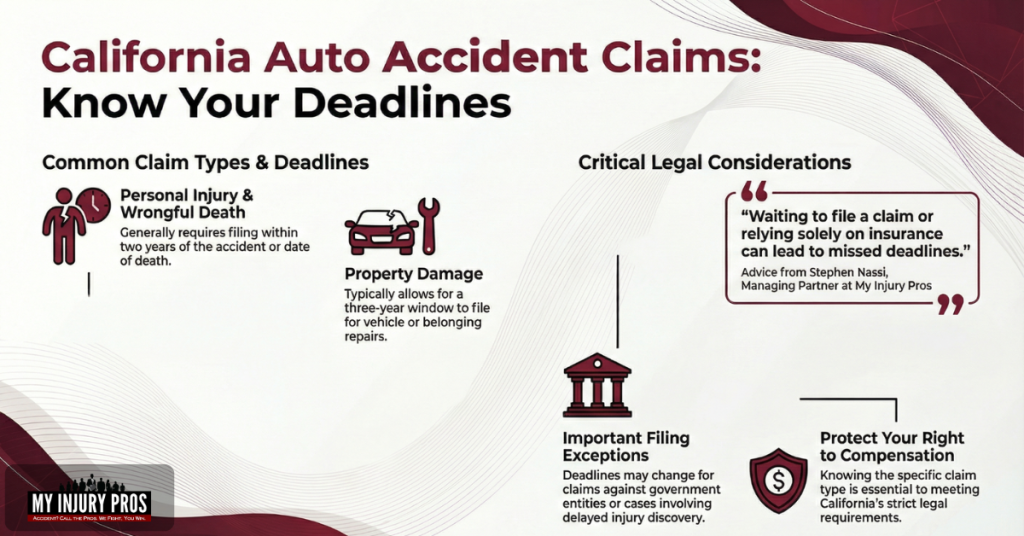
After a car accident in California, there are several types of claims you can file. Personal injury claims cover physical or emotional harm caused by a negligent driver. Property damage claims address repairs or replacement for your vehicle or other belongings. Wrongful death claims can be filed if a loved one dies due to someone else’s negligence.
According to Stephen Nassi, our managing partner at My Injury Pros, “Waiting to file a claim or relying solely on insurance can lead to missed deadlines."
The statute of limitations differs depending on the type of claim. Personal injury claims must generally be filed within two years of the accident. Property damage claims usually allow three years to file. Wrongful death claims typically have a two-year deadline from the date of death. Missing these deadlines can prevent legal action.
These rules are governed by the California Government Code and relevant Civil Code sections. Certain exceptions, like claims against government entities or delayed injury discovery, can change the filing window. Knowing the type of claim and applicable deadline is essential to protect your right to compensation.
Certain situations can change the normal limitations for car accident cases in California. While the general one-year statute of limitations sets a basic filing deadline, some facts can alter that time. Courts look at the details of the case to decide if an extension applies. These variables can affect when a person is allowed to bring a claim. Knowing these exceptions can protect your rights.

Tolling provisions can pause or extend the running of the clock. Tolling may apply if the injured person is unable to act or if the responsible party is unavailable. Ongoing medical treatment can also affect when the damages are fully known. In some cases, the time limit may not start until the injury is discovered. These rules can extend the effective filing deadline.
Special rules apply to minors and people who are legally incapacitated. For minors, the clock often does not start until they turn 18. For incapacitated victims, the statute may be paused until capacity is restored. Different rules may also apply in cases involving a victim's death. These exceptions can change the normal statute of limitations and the overall limitations for car accident claims.
Jane, a driver in Los Angeles, was hit by a negligent driver while stopped at a red light. She acted quickly by calling 911, reporting the accident to the police, taking photos of the scene, and collecting witness information. Within 24 hours, she notified her insurance company and documented her injuries and car damage, ensuring she followed the recommended steps immediately after the accident.
Recognizing the complexity of pursuing a claim, Jane contacted an experienced attorney who explained the statute of limitations and outlined the best course for her case. By acting timely, providing all evidence, and following legal guidance, Jane was able to secure maximum compensation for medical bills, lost wages, and property damage. Her prompt and organized response made the process smoother and ensured her rights were fully protected.
After an auto accident, such as a rideshare accident, quick and careful action is essential. What you do in the moments and days after a crash can affect your health, your rights, and any future claim. Acting in a timely manner helps protect important evidence and supports your case. These steps are especially important if you were injured in a car accident or if the situation later involves serious harm or wrongful death.
Take photos of the vehicles, road conditions, and visible injuries. Collect witness statements and request a copy of the police report to help show how the crash happened and who the at-fault driver may be.
Report the accident to your insurance company as soon as possible. Ask about deadlines, required forms, and next steps so your claim is handled correctly and promptly.
We advise getting checked by a doctor even if you feel okay. Medical records help link your injuries to the accident and are critical if you were seriously injured in a car crash.
Keep receipts, repair estimates, and proof of missed work. This helps show the full impact of the accident and supports fair compensation.
We recommend seeking legal help, especially when liability is disputed or when damages are serious. This is especially true in cases involving severe injuries or potential wrongful death claims.
Missing the statute of limitations can prevent you from recovering compensation after a car accident in California. Timely action would have prevented many victims from making simple errors. Below are the common mistakes we advise our clients to avoid after being in an auto accident:
Acting quickly after a car accident has clear benefits, but some victims wonder if waiting might be better. Filing early ensures that evidence is fresh, witnesses are available, and deadlines under the statute of limitations are met. However, waiting can allow more time to fully assess medical injuries or repair costs, but it carries the risk of losing critical evidence, miscalculating damages, or missing the filing deadline entirely.
We always tell our clients, "Acting quickly after an accident is imperative. Waiting even a few weeks can make it harder to gather evidence and meet legal deadlines.”
After an auto accident, a car accident lawyer can make the claims process much easier. Legal professionals guide victims through complex rules and deadlines. They help protect your rights and ensure your case is handled correctly. This support is especially important in personal injury cases or situations involving serious harm.
An attorney provides expert advice on when and how to act. They make sure all filing deadlines are met. Lawyers handle complex paperwork and clarify legal procedures. They also negotiate with insurers and other parties. This guidance reduces mistakes and stress, keeping your claim on track.
Our team at My Injury Pros often says, “Our job is to make the claims process less stressful. We handle deadlines, paperwork, and negotiations so our clients can focus on recovery.”
A lawyer ensures you receive fair compensation for your losses. They calculate damages, including medical expenses, lost wages, and pain and suffering. Attorneys negotiate directly with insurance companies for the best settlement. Their experience increases the chance of full recovery after being injured in a car accident.
Several challenges can arise when dealing with the statute of limitations in a car accident lawsuit. Many claimants are unsure when the clock starts to run. This can lead to confusion about when the limitations begin. Small mistakes in timing can have big legal consequences. These obstacles often prevent people from taking action on time.
One common issue is misunderstanding the applicable time limits. People may assume they have more time than the law allows. They may not realize when the limitations begin under the specific facts of their case. Different rules can apply based on injury discovery or other factors. This confusion can cause a valid car accident lawsuit to be filed too late.
Delayed action also creates problems with proof. Over time, physical evidence can be lost or destroyed. Witnesses may forget details or become unavailable. Medical and repair records may be harder to collect. This makes it more difficult to support a strong car accident lawsuit, even if it is filed before the deadline.
To overcome statute of limitations challenges in personal injury cases, early action is key. Do not wait to see how you feel before taking steps. Even when serious injuries take time to fully appear, the clock may already be running. Knowing this helps you avoid missed deadlines. Prompt action protects your right to recover damages.
Strong documentation makes a major difference. Keep copies of medical records, repair bills, and insurance letters. Take photos of the scene and your injuries. Save contact details for witnesses. These steps help preserve proof and strengthen personal injury cases if delays occur.
Timely legal advice is also critical. A car accident lawyer can confirm the correct deadline and handle filings. They can spot exceptions that may extend your time. They also act quickly to protect evidence. This support helps you stay on track and significantly enhances your likelihood of success, even with serious injuries.
Understanding the California auto accident statute of limitations is essential for protecting your right to file a claim. Deadlines for personal injury, property damage, and wrongful death claims differ depending on the type of case. Acting quickly and following the proper steps helps ensure your legal action is valid.
Consulting a personal injury attorney early is the best way to navigate these rules. An attorney can explain exceptions, guide you through the filing process, and help maximize your compensation. Don’t wait; timely action can make all the difference in your case.
Navigating a car accident claim in California can be confusing, especially with strict filing deadlines. My Injury Pros has years of experience helping clients understand the auto accident statute of limitations and avoid costly mistakes. Our team provides clear, reliable guidance to protect your rights and maximize your recovery. Reach out now to schedule a free consultation and get expert legal support for your case.
Understanding the California auto accident statute of limitations is crucial for protecting your right to file a claim. This FAQ section answers common questions to help you act in a timely manner and avoid missing important deadlines.
In California, you generally have two years from the date of the auto accident to file a personal injury lawsuit. If the claim involves property damage only, the deadline is usually three years from the date of the accident.
To determine if your auto accident case is within the statute of limitations in California, check the accident date and compare it to the two-year deadline for personal injury or the three-year deadline for property damage. If there are exceptions, such as claims against a government entity or injuries discovered later, a personal injury attorney can review your situation and confirm your exact deadline.
If you fail to meet California's statute of limitations, you may forfeit your right to compensation, resulting in you having to cover your own medical bills, lost wages, and repair costs. Even filing late can lead to dismissed claims and added legal expenses, so acting early helps avoid unnecessary financial loss.
Common mistakes include waiting too long to file a claim, misunderstanding the exact deadline, or assuming insurance will handle everything. These can be avoided by promptly documenting the accident, consulting an attorney early, and keeping track of all deadlines and communications with insurers or involved parties.
Disclaimer: The information provided on this blog is for general informational purposes only and does not constitute legal advice. Reading this content does not create an attorney-client relationship. Laws and regulations vary by jurisdiction and may change over time, so you should consult a qualified personal injury attorney for advice regarding your specific situation. Past examples, case studies, or hypothetical scenarios are illustrative only and do not guarantee similar results.
© 2026 My Injury Pros | All Rights Reserved |
Powered by GLP Marketing